
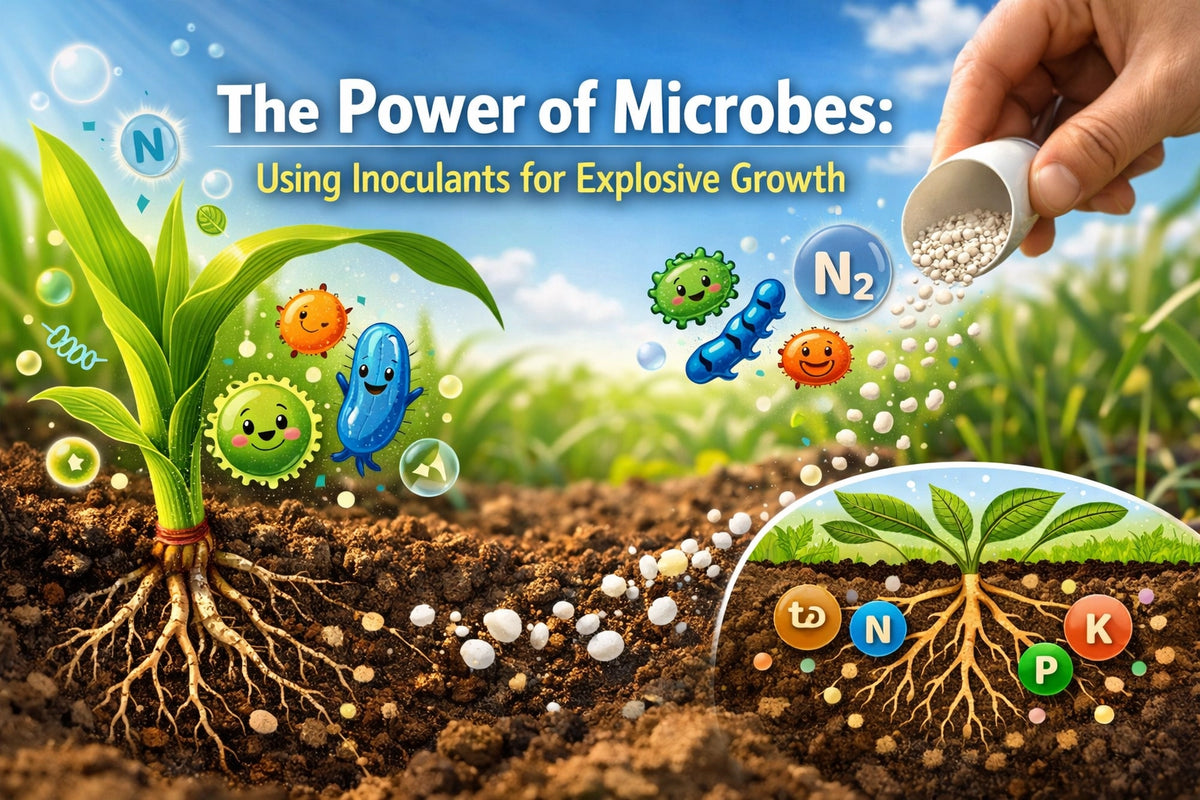
When most people start their first indoor grow, they focus on the visible stuff: the lights, the tent, and the bottles of liquid nutrients. It makes sense. You can see the light intensity, and you can measure the PPM in your reservoir. But the fact of the matter is that the most important work in your garden is happening where you can’t see it: in the "rhizosphere," or the area immediately surrounding your plant's roots.
In nature, plants don’t grow in sterile environments. They evolved over millions of years alongside a complex community of bacteria and fungi. These microscopic partners are what allow plants to thrive in the wild without a human standing over them with a pH pen. By bringing these microbial inoculants into your hydroponic or soil setup, you aren't just "adding supplements"; you are building a living biological engine that drives explosive growth and massive yields.
The Science of the Rhizosphere
The rhizosphere is like a busy marketplace. Your plants produce sugars through photosynthesis and pump them out through their roots. These are called "exudates." Why would a plant give away its hard-earned energy? Because it’s paying for a service. It is attracting beneficial microbes that, in exchange for sugar, provide the plant with nutrients, water, and protection.
When you use microbial inoculants, you are populating this marketplace with the best "vendors" available. Research shows that using these biological products can increase crop productivity by 10% to 30% on average. In specific cases, like with legumes, yield increases can hit a staggering 30% to 50%. This isn’t just anecdotal bro-science; it’s a measurable biological reality.
Mycorrhizae: The Plant’s Extended Nervous System
One of the most powerful tools in your microbial arsenal is Mycorrhizal fungi. If you’ve ever looked at a root ball and seen fine, white, thread-like structures that aren't quite roots, you’re likely looking at mycelium.
These fungi form a symbiotic relationship with the plant roots. They actually penetrate the root cells (endomycorrhizae) or wrap around them (ectomycorrhizae) and then grow out into the medium. This effectively extends the plant's root surface area by hundreds or even thousands of times.
How Mycorrhizae Boosts Your Grow:
- Phosphorus Access: Phosphorus is often "locked up" in the soil or media in forms the plant can't easily grab. Mycorrhizae produce enzymes that solubilize this phosphorus, making it available. Studies have shown vegetable phosphorus uptake can increase by 20% to 32% with proper inoculation.
- Water Retention: Because the fungal hyphae (those tiny threads) are so much smaller than root hairs, they can reach into microscopic pores in the soil to extract water that the plant otherwise couldn't touch. This makes your plants significantly more drought-resistant.
- Pathogen Protection: By physically occupying the space around the roots, beneficial fungi act as a biological shield, preventing "bad" fungi like Pythium (root rot) from getting a foothold.
Products like Xtreme Gardening Mykos are a pure source of these fungi and are a staple for any grower looking to maximize their root health.
Beneficial Bacteria: The Nutrient Miners
While fungi handle the heavy lifting of infrastructure, beneficial bacteria are the chemical engineers of your garden. The most common bacteria found in high-quality inoculants, like BAM! Microbial Inoculant, include Bacillus, Rhizobium, and Azotobacter.

Nitrogen Fixation
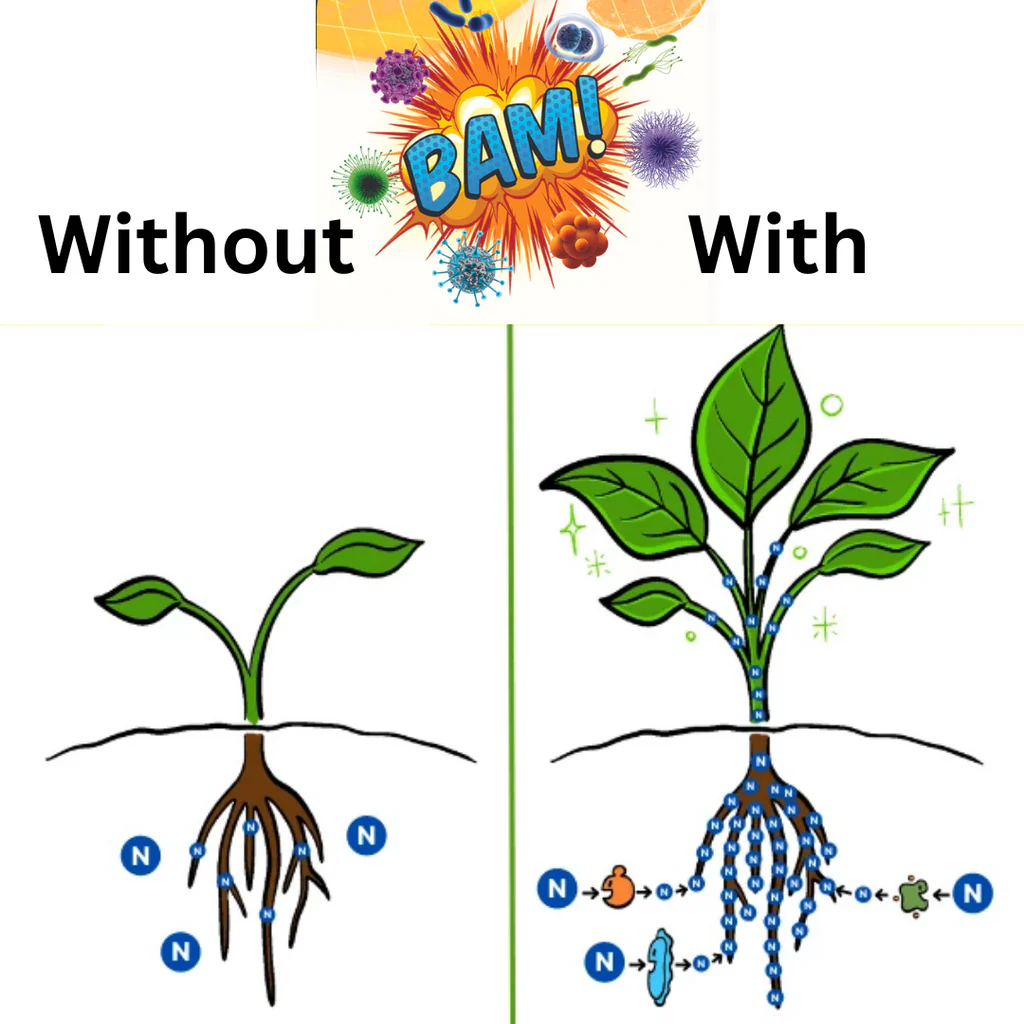
Nitrogen is the primary fuel for the vegetative stage. While the air is 78% nitrogen, plants can’t "breathe" it in; they have to take it through their roots in the form of nitrates or ammonium. Nitrogen-fixing bacteria, like those found in Azos, take atmospheric nitrogen and convert it into a form the plant can actually use.
Free-living nitrogen-fixing bacteria can provide 20–40 kg of nitrogen per hectare per season. For the home grower, this means you can often achieve faster vegetative growth while actually using fewer bottled nutrients.
Growth Hormones and Stress Tolerance
Beneficial microbes don't just provide food; they provide "instructions." Many bacteria produce phytohormones like auxins and gibberellins. These hormones tell the plant to grow more roots, stretch its stems, and increase its overall vigor. This leads to an 8% to 15% yield increase in many crops through hormone production alone. Additionally, these microbes help the plant manage stress from high salinity or temperature swings: common issues in indoor grow rooms.
The Economic Case for Microbes
It’s easy to look at a bottle of high-end microbes and think, "That's an extra expense I don't need." But the math tells a different story. In professional agriculture, inoculants typically cost between $30 and $100 per hectare but generate $100 to $300 in savings on chemical fertilizers.
For the indoor grower, the ROI is even more dramatic. By increasing your nitrogen use efficiency by 15-20%, you are wasting less of your expensive liquid nutrients. More importantly, the increase in quality: specifically terpene production and secondary metabolites: can vastly increase the value of your harvest. For example, spinach treated with biofertilizers showed nearly 59% higher phenolic content. In the world of high-value gardening, those "phenolics" are exactly what you're looking for.
How to Use Inoculants Effectively
Adding microbes isn't a "one and done" deal, especially in hydroponics or sterile soil-less mixes like coco coir. Because these systems don't naturally support life as well as native soil, you need to manage them actively.
- Start Early: Inoculate at the very beginning. Whether you are using seeds or cuttings, getting those microbes onto the first set of roots is crucial. Use a concentrated powder or dip during transplanting.
- Feed the Microbes: Microbes are living organisms; they need to eat. While they get some sugar from the plant, adding a carbohydrate source can supercharge their activity. Raw cane molasses or specialized microbial foods like RAW Cane Molasses provide the carbon boost they need to multiply.
- Brew a Tea: If you really want to see an explosion in growth, look into a Vortex Brewer. Compost teas allow you to take a small amount of inoculant and multiply the microbial population billions of times over a 24-48 hour period before applying it to your plants.
- Consistency is Key: In a hydroponic reservoir, microbial populations can fluctuate. Re-applying your inoculants every 1-2 weeks ensures the "good guys" always outnumber the pathogens.

Caution: Don't Kill Your Helpers
The biggest mistake growers make is spending money on high-quality microbes and then immediately killing them.
The Chlorine Problem: Most tap water contains chlorine or chloramines to kill bacteria. Unfortunately, it doesn't distinguish between the bad bacteria in the pipes and the good bacteria you just paid for. Always use a filter or a dechlorinating agent before adding your inoculants to water.
The Fertilizer Trap: Extremely high concentrations of synthetic fertilizers (high EC/PPM) can create a salty environment that dehydrates and kills microbes. If you are running a "heavy feed" program, you might be fighting against your microbial colony. Finding a balance or using plant nutrient packages designed to work with biology is a much better approach.
Temperature and Oxygen: Most beneficial microbes are "aerobic," meaning they need oxygen. If your reservoir is stagnant or your soil is waterlogged, the beneficials will die off, and anaerobic "bad" bacteria will take over, leading to that familiar swampy smell and root rot.
Final Thoughts
The shift from "sterile" gardening to "living" gardening is the hallmark of a master grower. By focusing on the biology of the root zone rather than just the chemistry of the nutrient solution, you are tapping into a system that has been perfected by nature over eons.
Whether you’re looking to save money on nutrients, protect your plants from disease, or simply hit that 30% yield increase you’ve been chasing, the answer usually lies in the microscopic world. Take care of your microbes, and they will take care of your plants. It seems more like a partnership than a chore; and the results speak for themselves.


Leave a comment
This site is protected by hCaptcha and the hCaptcha Privacy Policy and Terms of Service apply.