
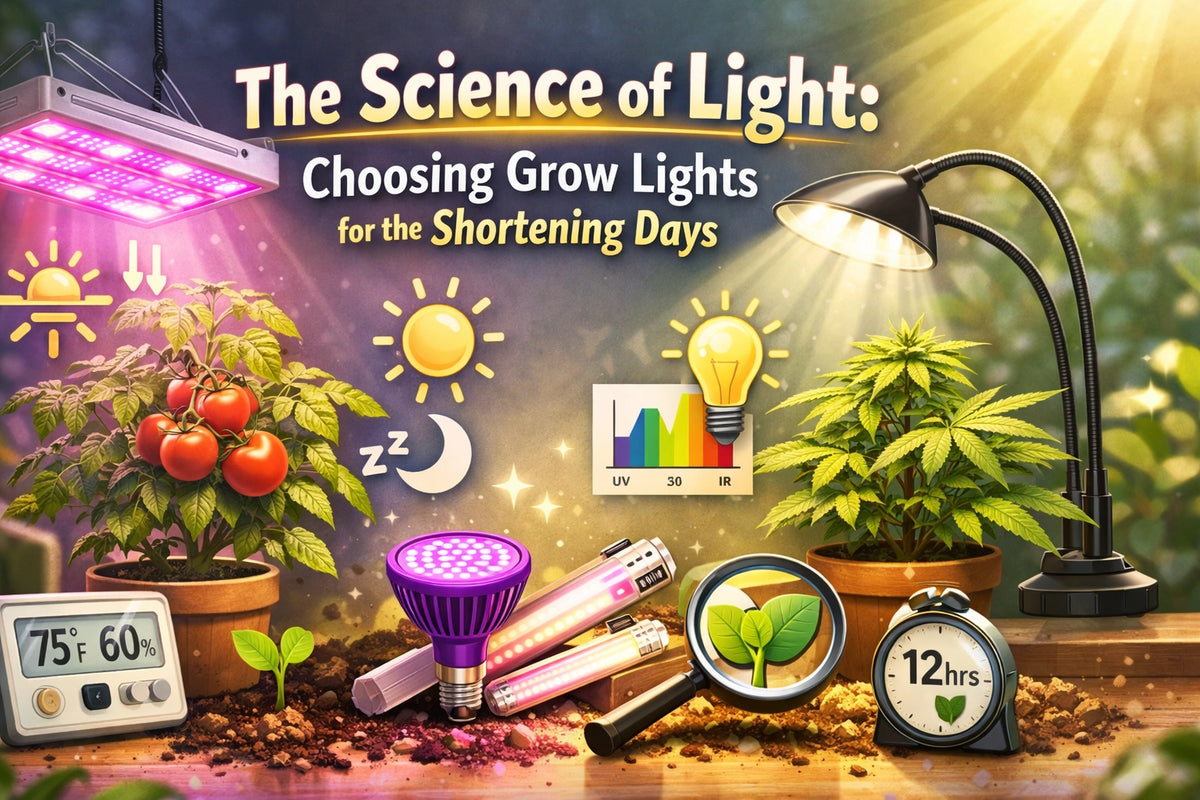
Interactive Feature: The Winter Light Spectrum Simulator
(Before we dive in, imagine your grow room as a custom laboratory. As the sun fades outside, you become the master of the seasons. Use the guide below to determine exactly what your "indoor sun" needs to look like this month.)
- Growing Leafy Greens? Focus on the Blue Spectrum (400-500nm).
- Triggering Flowers? You need the Red Spectrum (600-700nm).
- Boosting Resin/Oil? Look for UV and IR additions.
As the calendar flips deeper into the year, the "golden hour" starts happening at 3:00 PM, and the natural light hitting your windows becomes weak and slanted. For most gardeners, this is the time of year when the outdoor season ends and the indoor season truly kicks into high gear.
The fact of the matter is that plants don't care about the calendar; they care about the photoperiod. When the days shorten, your plants receive a biological signal that winter is coming. If you aren't prepared with the right technology, your garden will either go dormant, stretch toward the windows until it snaps, or trigger a premature flowering cycle that ruins your yield.
Today, we’re breaking down the science of supplemental lighting and why LED technology is the ultimate tool for conquering the shortening days.
Understanding Photoperiodism: Why Your Plants Are "Counting" Minutes
Plants are essentially biological clocks. They use a process called photoperiodism to sense the length of the night. This isn't just a fun fact; it’s a survival mechanism.
- Long-Day Plants: These include things like lettuce, spinach, and many summer vegetables. They want 14 to 18 hours of light. If the days shorten too much, they stop growing or "bolt" (go to seed) in a last-ditch effort to reproduce before the frost.
- Short-Day Plants: These are the heavy hitters like cannabis, hops, and poinsettias. They require long, uninterrupted periods of darkness (usually 12 hours) to begin their flowering phase.
When the sun starts setting earlier, your indoor plants get confused. If you're trying to keep a mother plant in the vegetative stage, the shortening natural light will trigger it to flower too early. This is where supplemental grow lights come in. You aren't just giving them food; you are giving them the "time" they need to stay in the right growth phase.
 Caption: A visual comparison of plant growth stages and their respective light requirements (Veg vs. Flower).
The LED Advantage: Why Efficiency Matters in Winter
In the old days, we used HPS (High-Pressure Sodium) bulbs that got so hot you could practically cook an egg on the reflector. In the winter, that heat might seem like a benefit, but it’s actually incredibly inefficient.
Modern LED tech, specifically fixtures like the KIND LED grow lights, has changed the game. These units offer 2X increased PPF (Photosynthetic Photon Flux) and 50% higher efficiency compared to traditional lighting.
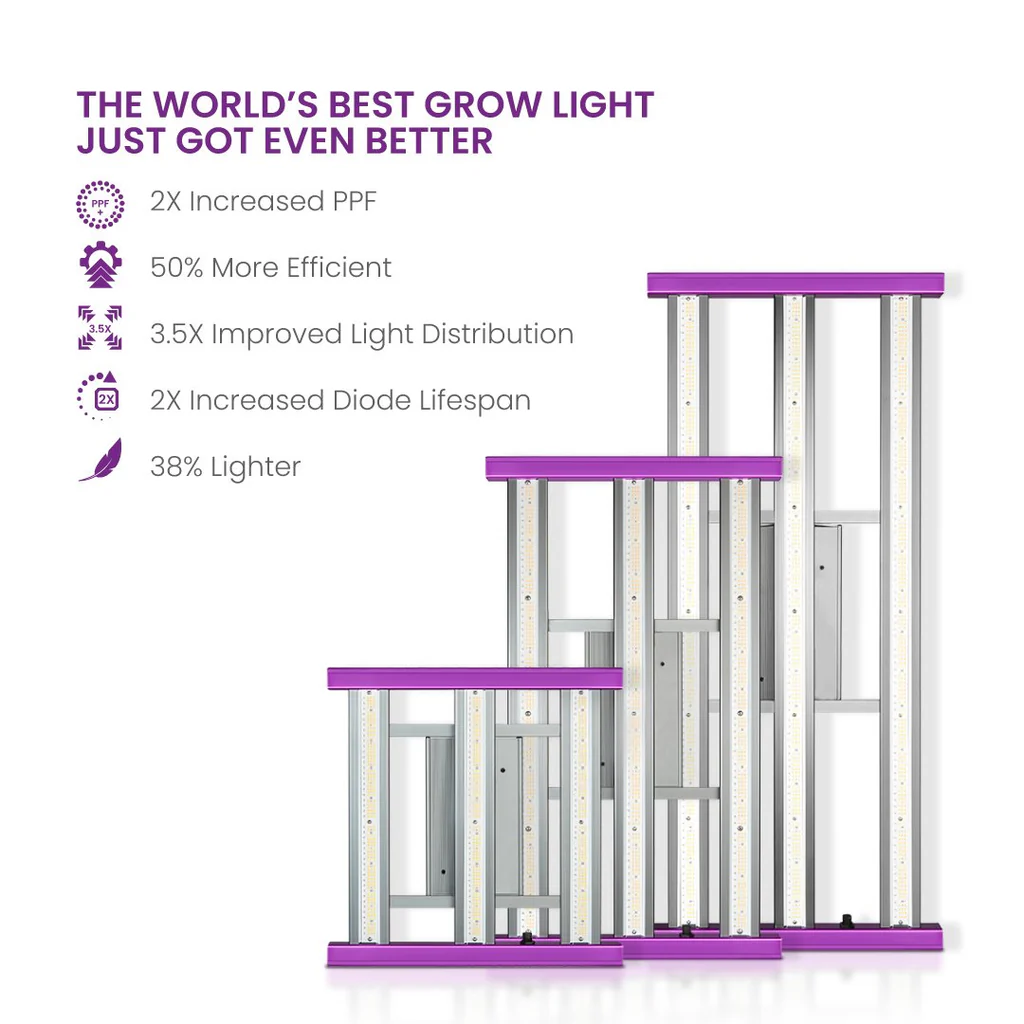
When you’re running lights for 18 hours a day to mimic a mid-summer sun, your electricity bill can become a nightmare. LEDs solve this by converting more energy into actual light rather than wasted heat. Plus, with a 2X longer diode lifespan, you aren't constantly replacing expensive bulbs every two cycles.
Spectrum Control: Tunable Sun in Your Tent
The sun doesn't just provide "white" light. In the spring, the light is bluer (higher energy), which promotes tight, leafy growth. In the fall, as the sun sits lower in the sky, the light shifts toward the red end of the spectrum, which tells the plant to start producing fruit and flowers.
When you choose a light like the Spectrum-Y Wireless LED, you aren't stuck with one "color." You get tunable spectrum settings.

This light even includes UV/IR output. Infrared (IR) light penetrates deeper into the canopy, while Ultraviolet (UV) light can actually increase the production of secondary metabolites (like terpenes and oils) as a defense mechanism. Being able to adjust these settings from your phone or a controller allows you to mimic the natural progression of the seasons: only faster and more efficiently.
Setting Your Light Schedule: A Cheat Sheet
Consistency is everything. If you forget to turn the lights off or: worse: forget to turn them on, you stress the plant. Stress leads to hermies, stunted growth, and poor nutrient uptake.
Here is the standard operating procedure for the shortening days:
- Seedlings/Clones: Give them 18-20 hours of light. They need the energy to establish roots. Check out our propagation collection for the best way to start this phase.
- Vegetative Stage: 18 hours on, 6 hours off. This mimics the peak of summer and keeps the plant focused on structural growth.
- Flowering Stage: 12 hours on, 12 hours off. This mimics the deep fall and tells the plant it's time to reproduce.
Caution: During the 12 hours of "dark" for short-day plants, the darkness must be absolute. Even a small light leak from a power strip or a cracked door can disrupt the flowering hormone (phytochrome) and cause the plant to revert to the vegetative stage. This is why a high-quality grow tent is essential.
Maximizing Your Light: Reflectivity and Environment
Since you are paying for every lumen your LED produces, you don't want that light being absorbed by dark walls or escaping into the room.

Using Panda Film is one of the most cost-effective ways to "multiply" your light. The white side has over 90% reflectivity, bouncing light back into the lower parts of your plant canopy that usually get shaded out.
If you want a more permanent solution, an AC Infinity Grow Tent with a diamond mylar interior is the way to go. These tents aren't just for hiding your plants; they are designed to be highly reflective "light boxes" that ensure your LED is working at 100% efficiency.

Common Pitfalls to Avoid
- Hanging Your Light Too Close: Modern LEDs are powerful. Even if they don't feel "hot" to your hand, the light intensity (PPFD) can be so high it bleaches the tops of your plants. Always start with the manufacturer's recommended height (usually 18-24 inches) and adjust based on plant response.
- Ignoring the "Dark" Cycle: We’ve seen growers check their plants at night with a flashlight. Don't do it. If you must see your plants during the dark cycle, use a green light, which doesn't disturb the plant's photoperiod.
- Cheaping Out on Timers: A $5 mechanical timer from a hardware store will eventually fail. When it sticks "on," it can ruin months of work. Use digital controllers for peace of mind.
The Verdict: Is It Time to Upgrade?
The shortening days of October are the ultimate test for an indoor gardener. If you are still relying on a window sill or an old, flickering T5 fixture, your plants are going to feel the "winter blues" pretty quickly.
Switching to a high-output LED system gives you the power to dictate the seasons. You can grow crisp lettuce in December or harvest dense flowers in the middle of a blizzard. The science is clear: better light equals better biology.
If you aren't sure which light fits your specific square footage, check out our Grow Help section or dive into our Complete Hydroponic Systems to see how light, water, and nutrients work together to create the "perfect garden" regardless of what the sun is doing outside.
 Caption: A detailed infographic showing the PAR map of a 4x4 grow tent with a commercial-grade LED fixture.
Ready to light up your grow? Explore our full range of LED lights here and let’s get growing!

Leave a comment
This site is protected by hCaptcha and the hCaptcha Privacy Policy and Terms of Service apply.