
Hey growers, Mark here from Perfect Gardens. If you’ve been hanging around the hydroponic scene for more than five minutes, you’ve probably heard someone obsessing over "Dissolved Oxygen" or DO. It sounds like one of those technical terms scientists throw around to feel smart, but the fact of the matter is, if you don't get your oxygen levels right, your plants are going to struggle no matter how expensive your nutrients are.
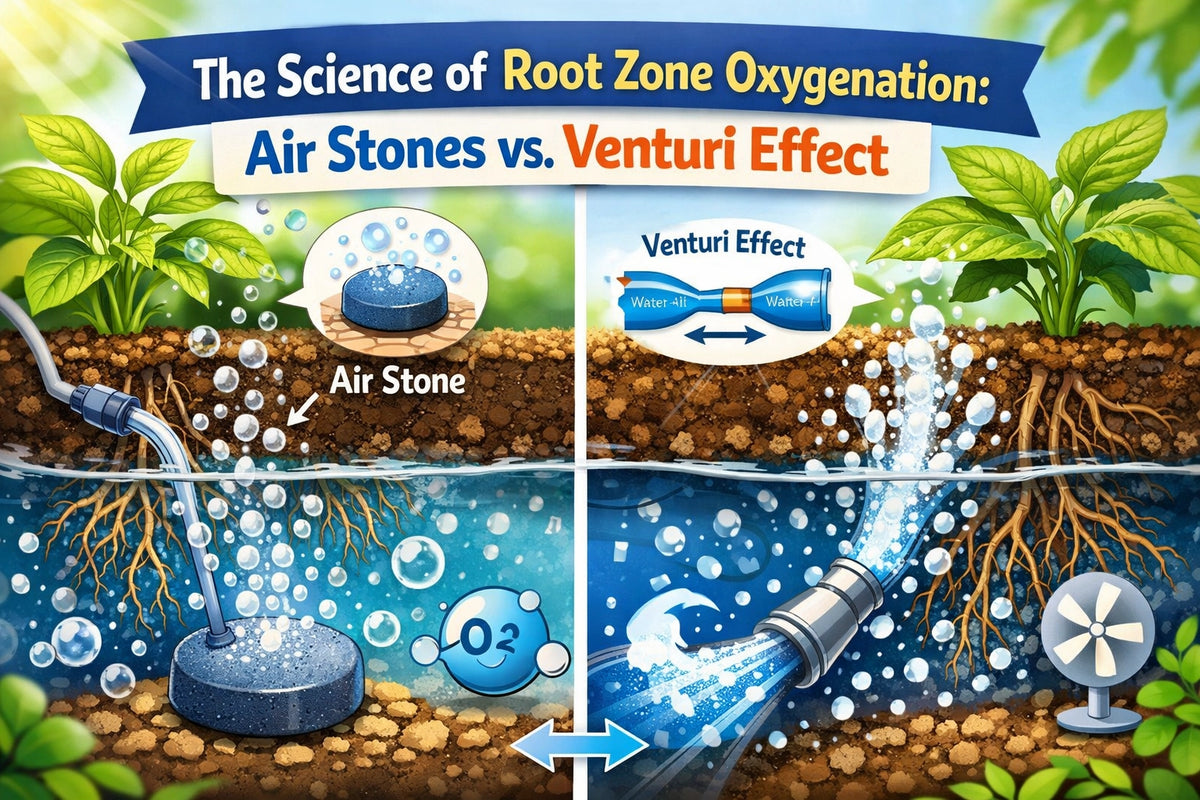
Today, we’re going to dive deep into the "lungs" of your hydroponic system. We’re comparing the two heavy hitters of aeration: the classic Air Stone and the slick Venturi Effect. By the end of this post, you’ll know exactly which one is right for your hydroponic setup.
Why Your Roots Are Gasping for Air
Before we talk about the gear, let’s talk about the biology. It’s a common misconception that plants only "breathe" carbon dioxide through their leaves. While that’s true for photosynthesis, the roots have a different job. They need oxygen to perform cellular respiration.
Think of cellular respiration as the process where the plant turns the sugars it made during the day into ATP (Adenosine triphosphate). ATP is basically the biological "gasoline" that powers every function in the plant, especially nutrient and water uptake.
If the oxygen levels in your reservoir drop too low (anoxic conditions), the roots stop working. They can’t "eat," they can't "drink," and they become sitting ducks for nasty pathogens like Pythium (root rot).
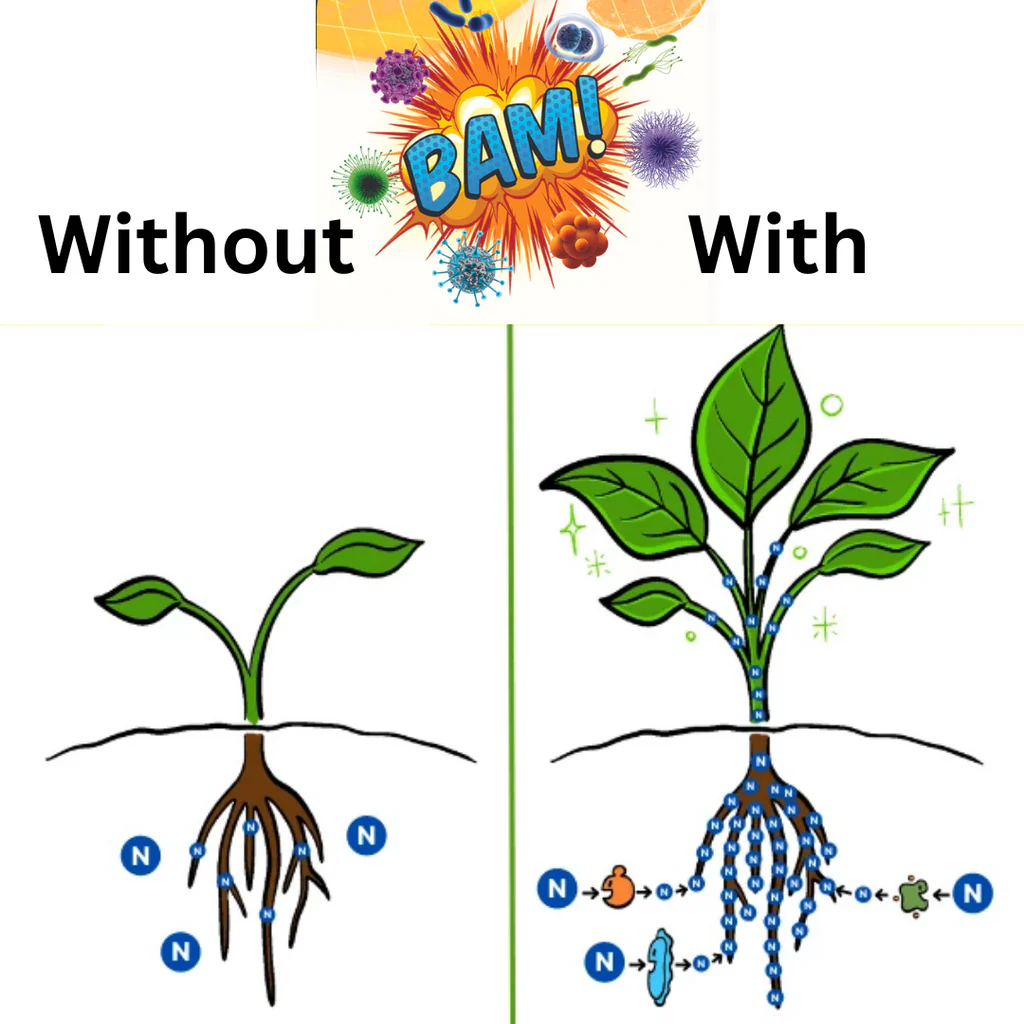
As you can see in the image above, the difference between a root zone with high dissolved oxygen and one without is night and day. High DO levels don't just keep the bad guys away; they also support beneficial soil microbes that help your plants grow faster and stronger.
Method 1: The Air Stone and Air Pump
This is the "Old Reliable" of the gardening world. If you buy a complete hydroponic system, it almost always comes with an air pump and some blue or grey stones.
How it Works
The air pump sits outside the reservoir and pushes air through a tube to a porous stone. The stone breaks that air into thousands of tiny bubbles. As these bubbles rise through the water, two things happen:
- Gas Exchange: Some oxygen from the bubbles dissolves directly into the water.
- Surface Agitation: When the bubbles pop at the surface, they break the "skin" of the water, allowing atmospheric oxygen to enter.
The Pros
- Simplicity: It’s incredibly easy to set up. Plug it in, drop the stone, and you’re bubbling.
- Affordability: You can get a decent pump and stone for a fraction of the cost of high-end plumbing.
- Visual Confirmation: You can literally see it working. If there are bubbles, there’s oxygen.
The Cons
- Heat Transfer: Most air pumps get warm. Since they are pulling air from your grow room (which is likely warm from your LED lights), they can actually pump heat into your reservoir. Warm water holds less oxygen than cold water.
- Maintenance: Air stones are notorious for clogging. Biofilms and mineral salts from your plant nutrient packages build up in the tiny pores, reducing efficiency over time.
- Noise: Cheap air pumps can sound like a beehive is living in your grow tent.
Method 2: The Venturi Effect
If the air stone is the old-school way, the Venturi effect is the "engineer’s choice." It uses physics instead of an extra motorized pump to get air into the water.
How it Works
The Venturi effect occurs when water is forced through a narrowed section of pipe. As the water speeds up through the "chokepoint," the pressure drops, creating a vacuum. This vacuum sucks air through a small intake valve and mixes it directly into the water stream.

The Pros
- No Extra Power: You’re already using a water pump to move your nutrients around. A Venturi injector just hitches a ride on that existing energy.
- Micro-Bubbles: Venturi systems often produce much smaller bubbles than air stones. Smaller bubbles have more surface area per volume, which means more oxygen dissolves into the water faster.
- Water Cooling: Unlike an air pump that compresses air (which creates heat), the Venturi effect can actually have a slight cooling effect on the water through evaporation.
- Durability: There are no "pores" to clog. As long as your water pump is running, the Venturi is working.
The Cons
- Complexity: It takes a bit more plumbing knowledge to install. You need to make sure your water pump has enough "head pressure" to trigger the Venturi vacuum.
- Flow Restriction: Because you are narrowing the pipe to create the effect, you will see a slight decrease in your overall water flow rate.
- Noise: They make a distinct "hissing" or "slurping" sound as they suck in air.
Head-to-Head: Which Is Better for Root Health?
The fact of the matter is that both methods work, but they shine in different scenarios.
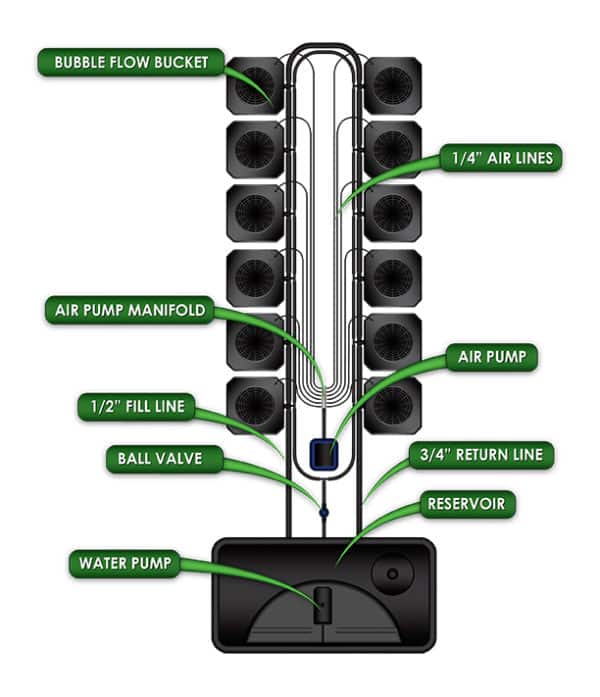
If you are running a small, 5-gallon Deep Water Culture (DWC) bucket, an air stone is perfect. It’s cheap, effective, and easy to replace. Check out our hydroponic bucket components if you're building a DIY setup.
However, if you are running a larger reservoir system or a recirculating system (RDWC), the Venturi effect is often the superior choice. It’s more efficient at scale and doesn't introduce the same heat issues that multiple large air pumps do.
A Note on Temperature
It seems more like a minor detail, but water temperature is actually the most important factor in oxygenation. At 65°F (18°C), water can hold a lot of dissolved oxygen. At 80°F (27°C), its capacity to hold oxygen drops significantly. No matter how many air stones or Venturi injectors you have, if your water is too hot, the oxygen just won't stay in it. This is why keeping your grow tent cool is so vital.
Boosting the Benefits: Microbes and Oxygen
Oxygenation isn't just about the plant roots; it's about the ecosystem living on the roots. When you have high DO levels, you create a playground for beneficial microbes.
At Perfect Gardens, we’re big fans of using BAM! Microbial Inoculant. These beneficial bacteria thrive in oxygen-rich environments. They work in tandem with the oxygen to break down nutrients and deliver them to the plant more efficiently.
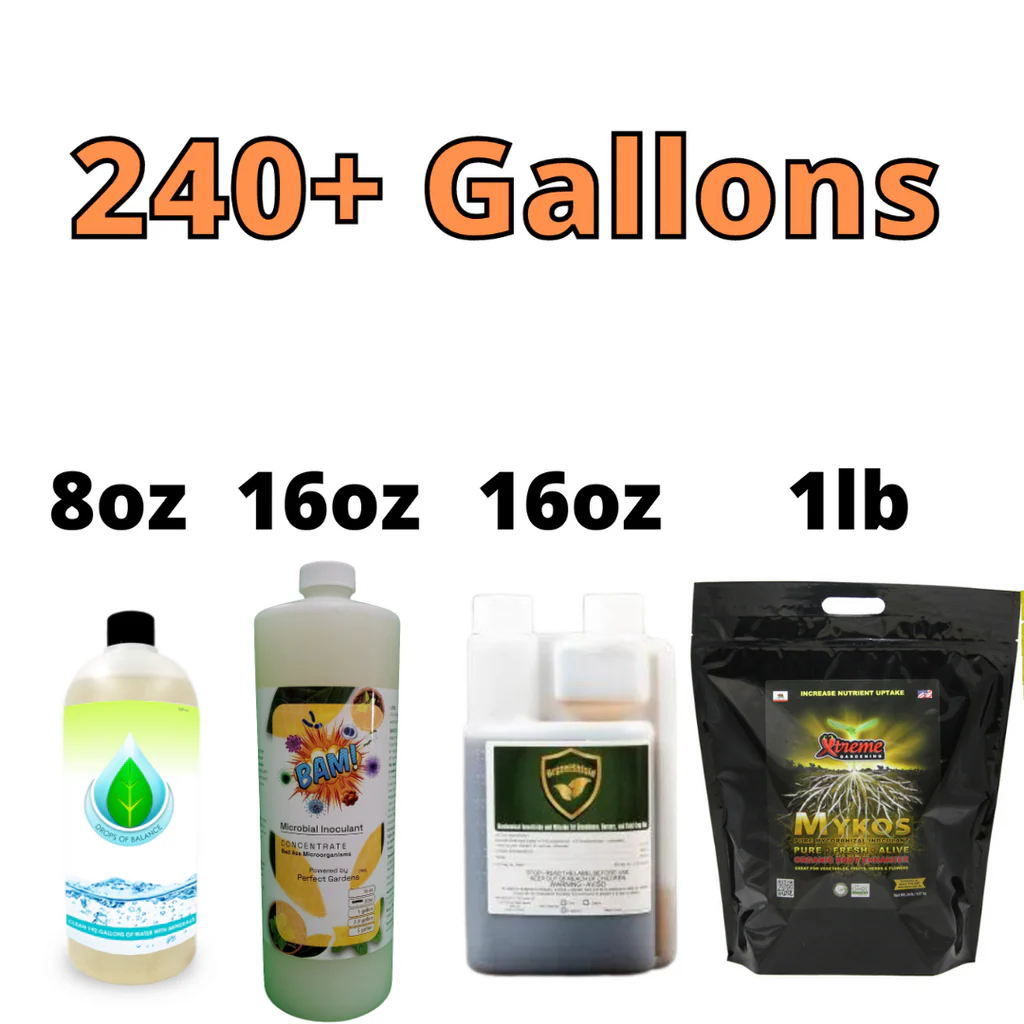
If you combine a high-efficiency oxygenation method (like a Venturi) with a solid microbial kit, you are essentially supercharging your plant's metabolism. It’s like giving your plants an all-you-can-eat buffet and the energy to eat it all.
Maintenance and Troubleshooting
Whether you choose air stones or a Venturi system, you can't just set it and forget it. Here are a few tips to keep your "breathing" system healthy:
- Check for Slime: If you see a brown, snot-like substance on your air stones or inside your Venturi intake, that’s biofilm. It’s a sign of low oxygen or high organic waste. Use a product like Drops of Balance to help keep things clean.
- Monitor the Bubbles: In a Venturi system, if the air intake stops "hissing," your water pump might be losing power or the intake hole is blocked. In an air stone system, if the bubbles look "lazy" or large, it’s time to scrub or replace the stone.
- Back-up Systems: If your air pump dies in the middle of a hot summer day, your plants can start dying within hours. It’s always a good idea to have a spare pump or a manual way to agitate the water in an emergency.
Final Verdict
So, air stones or Venturi?
If you want simplicity and low upfront cost, go with Air Stones. They are the standard for a reason: they work, and they’re easy to understand. Just be prepared to replace the stones every few grow cycles and keep an eye on your water temps.
If you want efficiency, longevity, and a cooler reservoir, go with the Venturi Effect. It’s a bit more "pro" and requires some plumbing, but the results in larger systems are undeniable.
At the end of the day, your goal is happy, white, fuzzy roots. If your roots look like brown spaghetti, something is wrong with your oxygen levels.
If you’re still not sure which way to go, or you need help picking out the right grow essentials for your project, don't hesitate to reach out. We’ve seen it all, and we’re here to make sure your garden is as perfect as it can be.
Happy growing!
: Mark, CEO of Perfect Gardens


1 comment
Daniel
How about the use of 3% hydrogen peroxide solution to reduce the bio slime on plant cuttings in the process
Leave a comment
This site is protected by hCaptcha and the hCaptcha Privacy Policy and Terms of Service apply.