
Blog
Understanding N-P-K: A Deep Dive into Hydroponic Nutrients
If you’ve spent more than five minutes looking at nutrient bottles for your indoor garden, you’ve seen those three bold numbers on the front of the label. Whether it’s 10-10-10, 5-0-1, or 0-50-30, these numbers: known as the N-P-K ratio: are the heartbeat of your plant's diet.
In a traditional soil garden, the earth acts as a buffer. It holds onto nutrients, slows down their release, and houses a complex ecosystem that helps "cook" the food for your plants. But in hydroponics? You are the chef, the server, and the busboy. There is no soil to catch your mistakes. If you get the N-P-K wrong, your plants will tell you: usually through yellowing leaves, stunted growth, or a complete lack of flowers.
At Perfect Gardens, we believe that understanding the science behind these three letters is the difference between a "okay" harvest and a legendary one. Let’s dive deep into what Nitrogen, Phosphorus, and Potassium actually do for your plants and how to read those labels like a pro.
The Big Three: Breaking Down N, P, and K
Plants require about 17 different elements to grow, but Nitrogen (N), Phosphorus (P), and Potassium (K) are the "Primary Macronutrients." These are the ones plants consume in the largest quantities. Think of them as the protein, carbs, and fats of the plant world.
N: Nitrogen – The Growth Engine
Nitrogen is primarily responsible for vegetative growth. It’s a core component of chlorophyll, the green pigment that allows plants to turn sunlight into energy via photosynthesis.
When your plant is in its "veg" stage, it’s building its skeleton: the stems, the branches, and the leaves. Nitrogen is the fuel for this construction. It’s also a key part of amino acids, which are the building blocks of proteins. Without enough Nitrogen, your plant will look pale and spindly, and growth will grind to a halt.
P: Phosphorus – The Energy & Flower Power
While Nitrogen builds the "body," Phosphorus handles the "plumbing" and the "reproduction." Phosphorus is essential for energy transfer within the plant. It’s a major component of DNA and RNA.
In the early stages, Phosphorus is vital for root development. If you want a thick, white root mass, you need P. Later in the plant's life, Phosphorus takes center stage for flowering and fruiting. It helps the plant transition from growing tall to producing those heavy, resinous yields we’re all looking for.
K: Potassium – The Regulator
Potassium is often the most misunderstood of the three. It doesn’t actually become part of the plant’s physical structure in the same way N and P do. Instead, it acts more like a traffic cop or a biological "activator."
Potassium regulates the opening and closing of the stomata (the tiny pores on the leaves that allow the plant to breathe). It also activates over 80 different enzymes that trigger growth and immune responses. A plant with plenty of Potassium is more resistant to temperature swings, drought, and pests. It’s what gives your final product its flavor, aroma, and overall quality.

How to Read the Label: The Math Behind the Numbers
The numbers on the bottle represent the percentage by weight of each nutrient.
If you have a 1-gallon bottle of a 10-5-5 nutrient:
- 10% is Nitrogen (N)
- 5% is Phosphorus (P, specifically expressed as P₂O₅)
- 5% is Potassium (K, specifically expressed as K₂O)
The remaining 80%? That’s usually a mix of water, secondary macronutrients (like Calcium and Magnesium), micronutrients (like Iron and Zinc), and sometimes proprietary chelating agents that help the plant absorb the minerals.
The Fact of the Matter Is: Not all 10-10-10 fertilizers are created equal. In hydroponics, you must ensure the nutrients are "water-soluble." Soil fertilizers often use organic matter that needs to be broken down by soil microbes over weeks or months. In a hydro system, if that nutrient isn't immediately available in the water, your plant is going to starve. This is why we always recommend using nutrients specifically formulated for hydroponic use.
 Suggested caption: A table showing the different N-P-K requirements for the Seedling, Vegetative, and Flowering stages.
Balancing Ratios for Growth Stages
Your plant's appetite changes as it matures. Feeding a flowering plant a high-nitrogen "Veg" nutrient is a recipe for disaster: you’ll end up with a giant green bush with tiny, airy flowers.
1. The Vegetative Stage (High N, Moderate P, Moderate K)
During veg, you want a ratio that leans heavily on the Nitrogen. A common ratio might be something like 3-1-2. This ensures the plant has enough "green power" to fill out your grow tent.
2. The Transition & Early Flower (Moderate N, High P, High K)
As you flip your lights to 12/12 (for photoperiod plants), the plant’s internal chemistry shifts. It starts demanding more Phosphorus to build the foundations of flowers. Many growers use a "Transition" feed during this time to bridge the gap.
3. Late Flower/Ripening (Low N, Very High P, Very High K)
In the final weeks, you want to taper off the Nitrogen significantly. Too much Nitrogen in late flower can actually harsh the flavor of your harvest and cause "revegging" issues. This is when you bring in the "Bloom Boosters" with ratios like 0-50-30. The high Potassium helps the plant pack on weight and develop its terpene profile.
The Role of Microbes in N-P-K Uptake
Here is where it gets interesting. Even if you have the perfect N-P-K ratio in your reservoir, your plants might still struggle to eat if the "biology" isn't right. In nature, plants have a symbiotic relationship with bacteria and fungi.
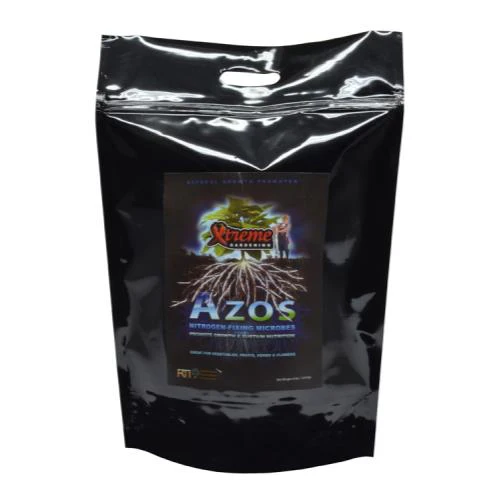
Nitrogen-fixing microbes, like those found in Azos Nitrogen-Fixing Microbes, take atmospheric nitrogen and "fix" it into a form the plant can easily digest. Similarly, Mycorrhizae (found in products like Mykos) extend the root system's reach, acting like a specialized delivery service for Phosphorus.
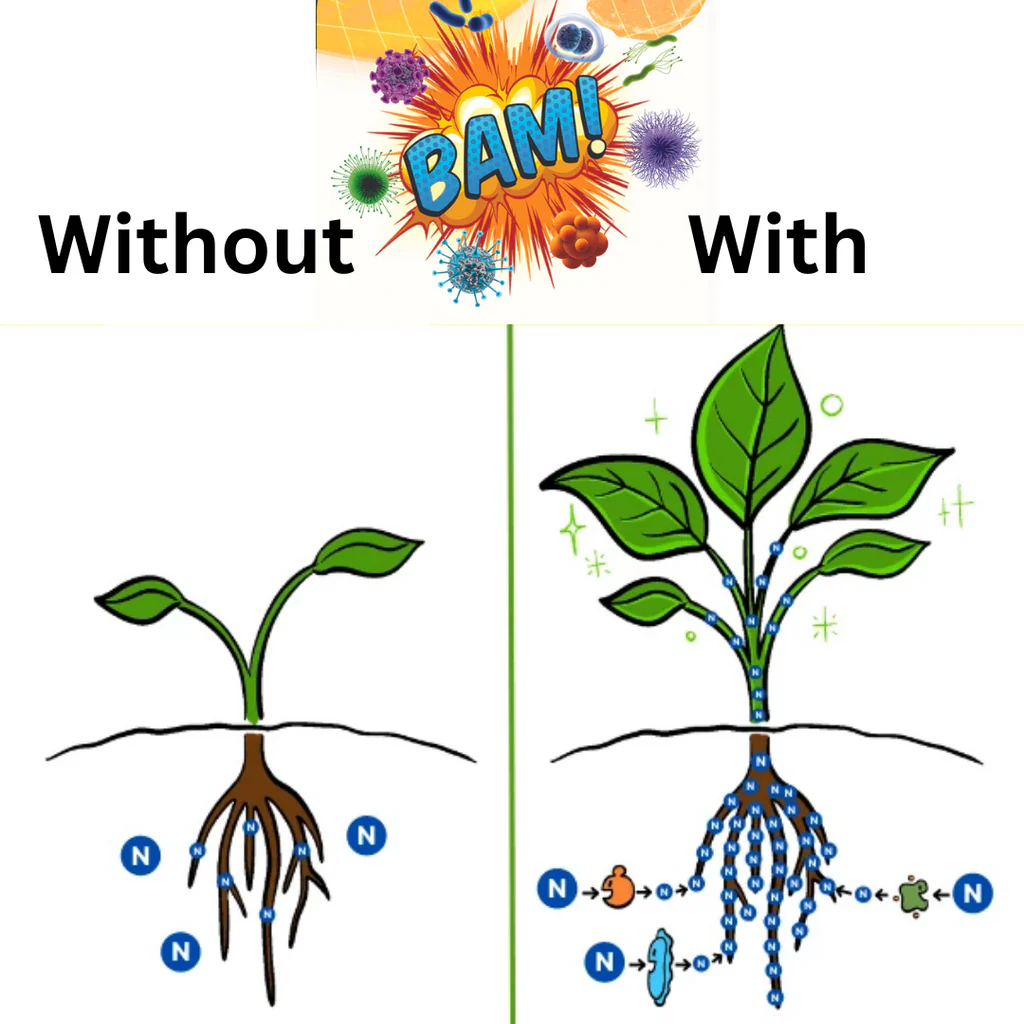
Adding a microbial inoculant like BAM! Microbial Inoculant can significantly increase the efficiency of your N-P-K. When you have a healthy "Army of Growers" (microbes) in your root zone, you can often use fewer nutrients because the plant is absorbing what you give it much more effectively.
Beyond N-P-K: Don't Forget the Rest
While N-P-K are the stars of the show, they can't perform without the supporting cast.
- Secondary Macronutrients: Calcium (Ca), Magnesium (Mg), and Sulfur (S). These are critical. If you are using RO (Reverse Osmosis) water, you almost certainly need to add a Cal-Mag supplement, as RO water is stripped of these minerals.
- Micronutrients: Iron, Boron, Manganese, Zinc, Copper, and Molybdenum. These are needed in tiny amounts, but a deficiency in even one of them can lock out your N-P-K uptake entirely.
This is why we often suggest beginners start with a high-quality base nutrient. These formulas are pre-balanced to ensure that the N-P-K works in harmony with the micro-elements.
Common Pitfalls: The "More is Better" Fallacy
The biggest mistake we see at Perfect Gardens is "Nutrient Burn." New growers often think that if a 10-10-10 ratio is good, then doubling the dose must be better.
This is not the case.
Plants can only process so much at once. When you overfeed, the salts from the nutrients build up in the growing medium (like coco or rockwool). This increases the "Electrical Conductivity" (EC) to a point where the plant can no longer "suck up" water through osmosis. The plant actually starts to dehydrate even though its roots are soaking wet.
Caution: Always start with half the recommended dose on the bottle and work your way up. It is much easier to fix a slight deficiency than it is to save a plant from severe nutrient burn. Check out our Grow Help Videos for a visual guide on identifying these issues.
Testing and Maintenance
In hydroponics, your pH level is the "key" that unlocks the N-P-K. If your pH is too high or too low, the nutrients become chemically "locked," and the plant can't grab them.
- For most hydro setups: Aim for a pH between 5.5 and 6.5.
- Nitrogen is best absorbed at the lower end of that scale.
- Phosphorus and Potassium prefer the slightly higher end.
This is why we recommend letting your pH "swing" naturally within that range rather than trying to keep it pinned at a perfect 5.8 every single day.
Summary: Building Your Nutrient Strategy
Understanding N-P-K isn't about memorizing chemical formulas; it's about learning the language of your plants.
- Vegetative Stage: Focus on Nitrogen to build a strong frame.
- Flowering Stage: Shift to Phosphorus and Potassium for yield and quality.
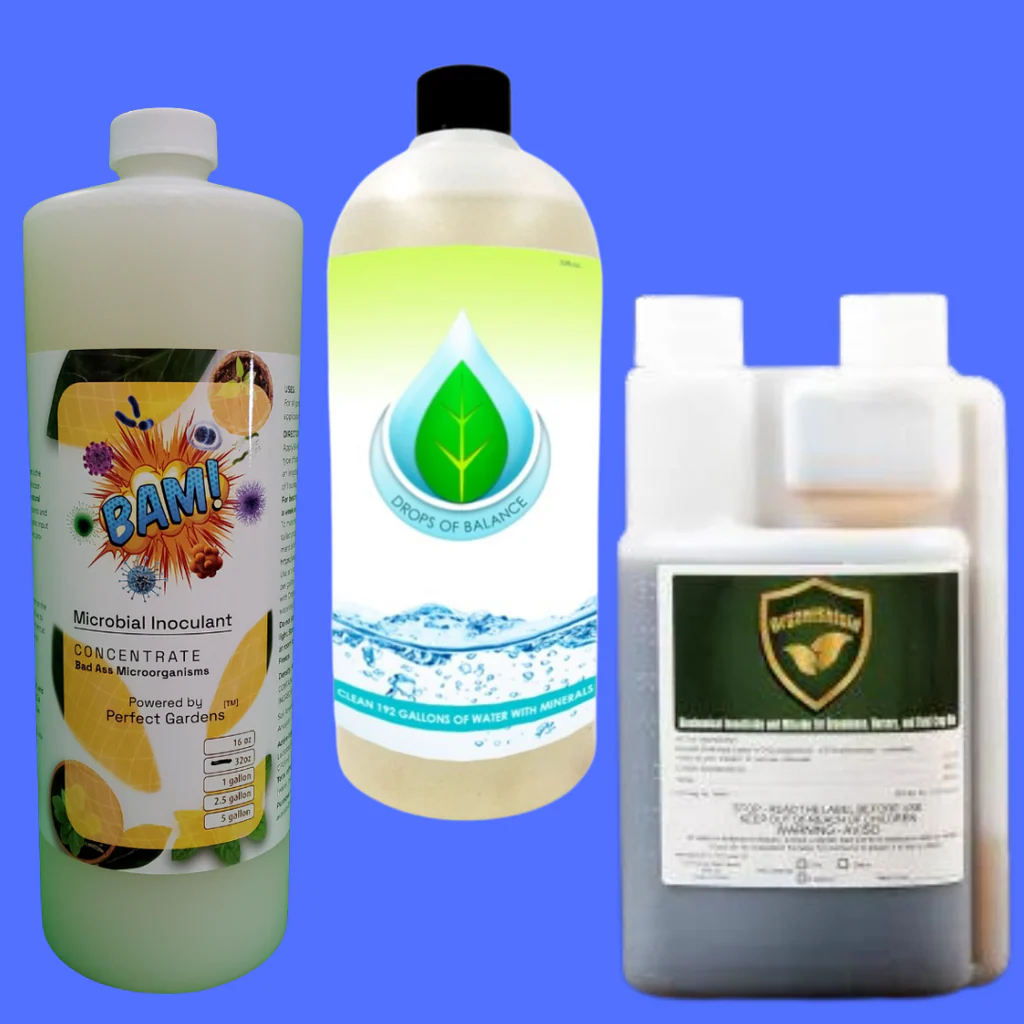
- Use Microbes: Products like BAM! and Azos make your N-P-K work harder.
- Watch the pH: Without the right pH, your N-P-K is useless.
- Quality Over Quantity: Use high-quality, water-soluble nutrients designed for hydroponics.
If you’re ever feeling overwhelmed by the numbers, don't sweat it. We've helped thousands of growers dial in their systems. Feel free to check out our About Us page to see our philosophy on gardening or Contact Us directly if you’ve got a specific nutrient puzzle you can’t solve.
Happy growing, and remember: keep it simple, watch your plants, and the N-P-K will handle the rest!