
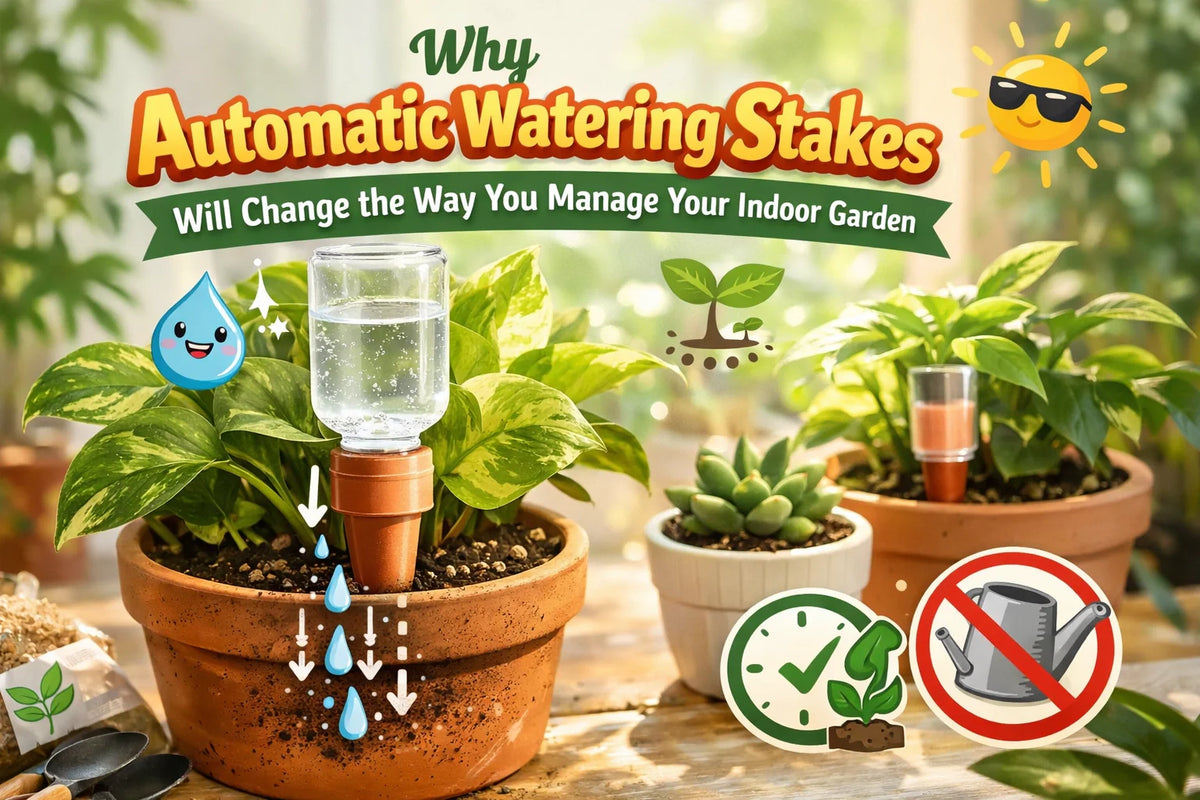
![[HERO] Why Automatic Watering Stakes Will Change the Way You Manage Your Indoor Garden](https://cdn.mar4blism.com/EtnLAgOzmS1.webp)
If you have ever come home to a wilted, sad-looking plant after a long weekend away, or if you’ve struggled to figure out exactly when your soil is "dry enough" to water, you are not alone. Watering is arguably the most repetitive and error-prone task in indoor gardening. It is the one thing you can’t skip, yet it is also the easiest thing to mess up.
The fact of the matter is that manual watering creates a "feast or famine" cycle for your plants. You pour water in, the soil becomes saturated (often drowning the roots of oxygen), and then it slowly dries out until the plant begins to stress. Then you repeat the process. This fluctuation is hard on a plant’s vascular system.
Automatic watering stakes: specifically high-quality ceramic systems like Blumats: completely flip this script. Instead of you deciding when the plant needs water based on a schedule, the plant (or rather, the soil) decides when it needs water based on actual moisture tension. It is a fundamental shift in how we manage hydroponics and soil-based indoor gardens.
How Do Automatic Watering Stakes Actually Work?
Before we dive into the benefits, we need to clear up a common misconception. Many people think "watering stakes" are just those cheap plastic globes you see in hardware stores. Those are essentially just slow-release bottles. When we talk about changing the way you manage your garden, we are talking about pressure-sensitive ceramic stakes.
These systems work through a process called capillary action and hydrostatic pressure. A ceramic cone is filled with water and inserted into the soil. As the soil dries out, it creates a "pull" (tensiometer) that draws moisture through the ceramic wall. In more advanced systems, this suction opens a small valve that allows water to flow from a reservoir through a tube directly to the soil. Once the soil is moist enough, the suction stops, the valve closes, and the water flow cuts off.

This creates a constant, stable moisture level. You aren't just "watering" the plant; you are maintaining a specific environment within the root zone.
1. Eliminating the Guesswork of Over and Underwatering
The biggest killer of indoor plants isn't pests or bad lighting: it’s the watering can. Overwatering leads to root rot, fungus gnats, and nutrient lockout. Underwatering leads to stunted growth, leaf drop, and salt buildup in the soil.
Automatic stakes act as a mechanical brain for your root zone. Because the stakes respond to the soil's moisture tension, they only deliver water when it is physically required.
- During the vegetative stage, when plants are smaller and drinking less, the stakes deliver very little.
- During peak flowering/fruiting, when the plant is thirsty, the stakes open up and provide more.
This level of precision is almost impossible to achieve by hand, especially if you have a variety of different plant species in one room.
2. Unmatched Flexibility and "Grower Freedom"
One of the hardest parts about being a dedicated gardener is the "tether." You feel like you can’t leave your house for more than 48 hours because your plants might dry out. This is especially true if you are using tents and film where temperatures can rise quickly, drying out small pots in a matter of hours.
Watering stakes provide a level of peace of mind that is hard to overstate. By setting up a central reservoir, you can effectively walk away from your garden for a week or two at a time. All you need to do is ensure your reservoir is topped off. If you are looking to further optimize your time, check out our guide on smart indoor gardening setup and automation tools.

3. Targeted Water and Nutrient Efficiency
When you water a pot with a traditional watering can, a lot of that water just runs down the sides of the dry soil and out the bottom. This is called "channeling." It wastes water, and more importantly, it wastes expensive nutrients.
Automatic stakes deliver water slowly. Because the soil stays consistently moist, the water doesn't "channel" through cracks in the dirt. Instead, it moves through the medium evenly. This increases water efficiency by 50% to 70%. If you are running a large-scale setup, this reduction in waste translates directly to lower utility bills and less money spent on nutrient packages.
Pro Tip: If you are using organic nutrients or microbial inoculants, these stakes are a game-changer. Microbes need a consistent environment to thrive. By avoiding the "drought" phase of the watering cycle, you keep your microbial colonies alive and active 24/7.
4. Improving Root Health and Structure
Roots are the engine of the plant. In a manual watering setup, roots often grow toward the bottom of the pot where the water collects, or they stay shallow if you only do light surface waterings.
Because automatic stakes provide a consistent point-source of moisture, the roots grow more evenly throughout the medium. If you pair watering stakes with fabric grow pots, you get a powerhouse combination. The fabric allows for air-pruning of the roots, while the stakes ensure those roots never experience the "thirst stress" that causes them to harden off or die back.
5. Easy Scaling for Growing Gardens
Manual watering is fine when you have two plants. When you have twenty, it becomes a part-time job.
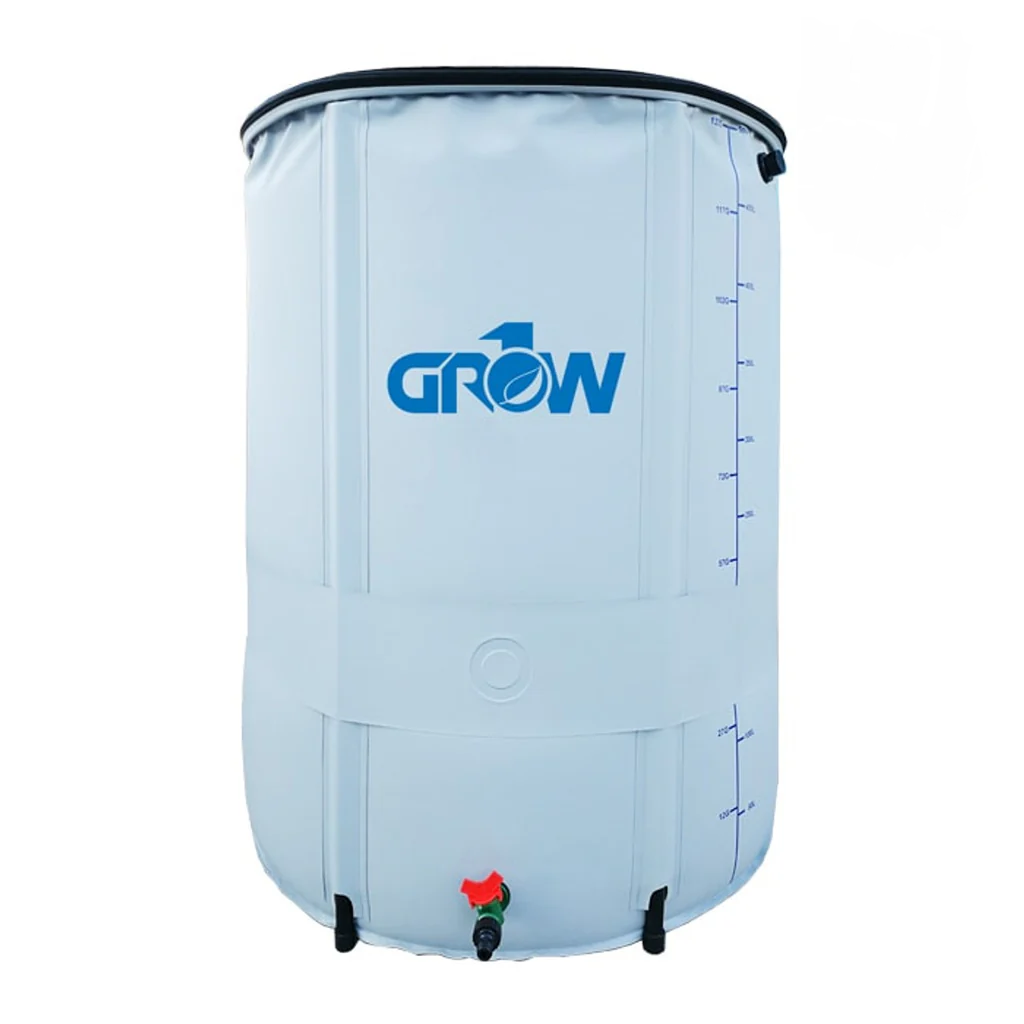
The beauty of a stake system is its modularity. You can start with a small kit and simply add more "T" connectors and stakes as your garden grows. You can run 50 plants off a single collapsible water storage tank, provided your reservoir is elevated higher than your plants (for gravity-fed systems).
Common Pitfalls and "Cautions"
While we love automatic watering stakes, it’s important to be realistic. This isn't a "set it and forget it forever" solution. There are a few things that can go wrong if you aren't paying attention.
The "Runaway" Reservoir
If you set your reservoir too high or your stakes aren't calibrated correctly, the valve can stay open too long, leading to a flooded tent. It is vital to test your system for 2-3 days while you are actually home before trusting it for a long vacation.
Air Bubbles
For ceramic stakes to work, they must remain full of water. If the reservoir runs dry, air gets into the line. Once air is in the system, the suction "link" is broken, and the stakes will stop working. You’ll need to re-soak the ceramic cones and "bleed" the lines to get them going again.
Salt Buildup
If you use heavy mineral-based nutrients through your lines, you risk clogging the small drippers or the ceramic pores. We generally recommend running clean, filtered water through the stakes and top-dressing your nutrients or using a separate nutrient package if you aren't prepared for the maintenance of cleaning lines.

Comparison: Stakes vs. Traditional Drip Systems
| Feature | Automatic Stakes (e.g., Blumat) | Traditional Pump Drip Systems |
|---|---|---|
| Power Source | Gravity (No electricity needed) | Electric Pump & Timer |
| Responsiveness | Reacts to soil moisture levels | Operates on a fixed timer |
| Complexity | Simple mechanical setup | Requires programming/wiring |
| Water Delivery | Constant "drip" as needed | High-volume bursts |
| Risk | Clogging or air bubbles | Power outages or timer failure |
Traditional drip systems are great, but they are "dumb." They turn on because the clock says so, regardless of whether the plant is actually thirsty. Automatic stakes are "smart" without needing a computer.
Setting Up Your First System
If you’re ready to move away from the watering can, here is a basic checklist to get started:
- Choose Your Reservoir: A 5-gallon bucket works for a few plants, but a dedicated storage tank is better for larger rooms.
- Soak Your Cones: The ceramic stakes must be submerged in water for at least 15-20 minutes before installation to ensure the air is out of the ceramic.
- Dial it In: Install the stakes in moist soil. Tighten the adjustment knob until the water stops dripping, then follow the manufacturer's instructions to open it just a hair.
- Monitor: For the first 48 hours, check the soil moisture daily. If the soil is getting too wet, turn the knob 1/8th of a turn clockwise. If too dry, turn it counter-clockwise.
Final Thoughts
The shift toward automation in gardening isn't about being lazy; it’s about being more precise. By using automatic watering stakes, you provide your plants with the one thing they crave most: consistency.
When the root zone is stable, everything else: nutrient uptake, photosynthesis, and growth rates: improves. Whether you are growing high-value crops in LED grow tents or just trying to keep your living room ferns alive, these tools are one of the best investments you can make for your garden’s health and your own sanity.
Ready to automate? You can find everything you need to get started in our Grow Essentials collection. If you're still figuring out your setup, keep exploring our blog for more tips on how to make your garden work for you, not the other way around.



Leave a comment
This site is protected by hCaptcha and the hCaptcha Privacy Policy and Terms of Service apply.