
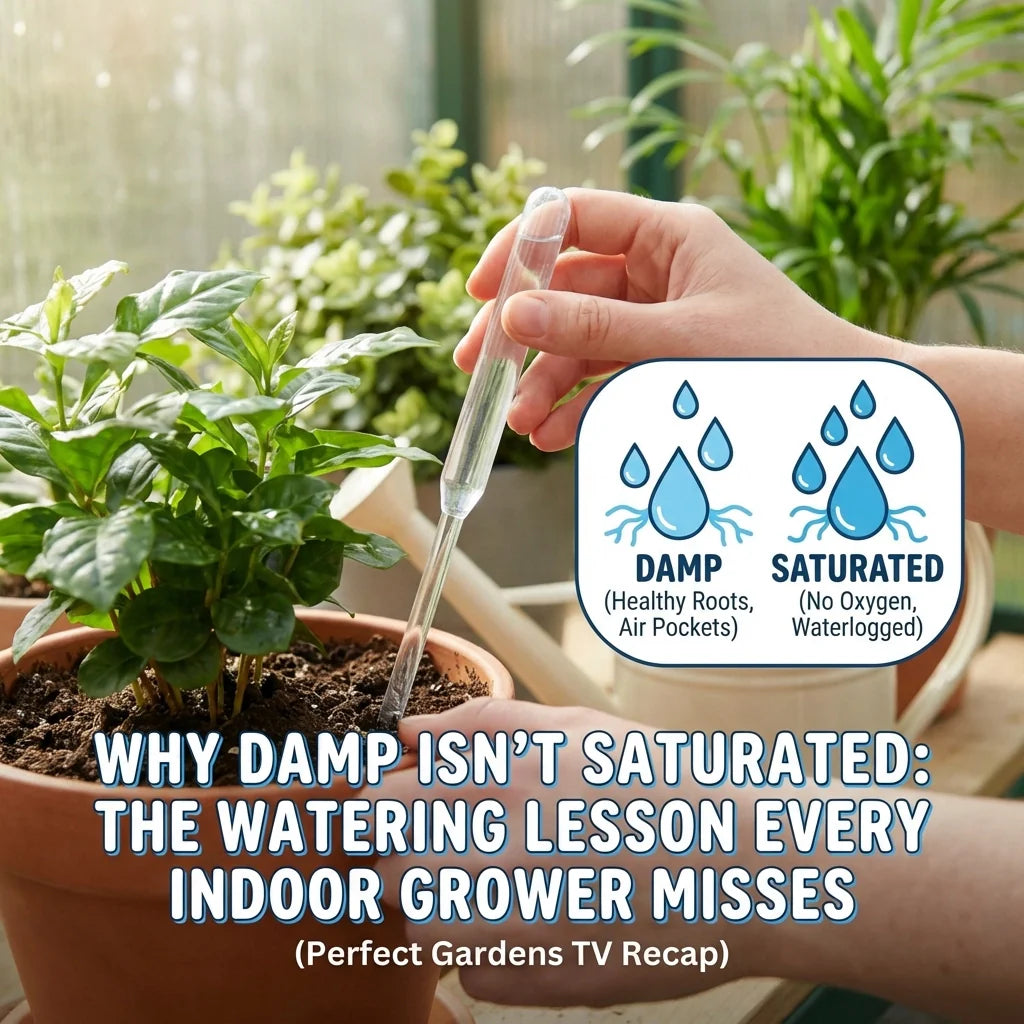
Most indoor growers are drowning their plants without even knowing it. That's the hard truth Mark dropped in his latest Perfect Gardens TV episode, and it's probably going to change how you think about watering forever.
Here's the thing: your plants aren't dying from underwatering. They're dying from the wrong kind of watering. There's a massive difference between damp soil and saturated soil, and once you understand it, you'll never kill another houseplant again.
The Bucket Experiment That Changes Everything
Mark's bucket demonstration really drives this home. Picture two identical containers of growing medium. In the first one, you sprinkle water on top every day, just enough to make the surface feel moist. In the second, you water slowly and thoroughly until water drains from the bottom, then you wait.
After a week, here's what happens: Container one smells funky, the roots are brown and mushy, and your plant looks like it's dying despite "regular watering." Container two? Healthy white roots, happy plant, and soil that actually smells earthy instead of swampy.
The difference? Container one stayed damp but never got properly saturated. Container two got the deep, thorough watering that plants actually need.

Why Damp Soil Is Your Plant's Worst Enemy
When you keep soil constantly damp with frequent, shallow watering, you're creating the perfect storm for root rot. Here's the science behind why this kills plants:
Oxygen starvation happens fast. Roots need oxygen just as much as they need water. When soil stays perpetually moist at the surface but never gets the chance to drain and breathe, anaerobic bacteria take over. These are the bad guys that cause that swamp smell and turn healthy roots into mush.
Pathogens love stagnant moisture. Fungi, bacteria, and other plant diseases thrive in consistently damp conditions. It's like leaving a wet towel in a dark closet, things get gross quickly. Your daily misting routine isn't nurturing; it's creating a petri dish.
Root development suffers. When roots can always find moisture at the surface, they never develop the deep, robust root system that makes plants resilient. You end up with weak, surface-level roots that can't support healthy growth.
The fact of the matter is, most houseplant deaths blamed on "overwatering" are actually caused by poor watering technique, not too much water.
What Proper Saturation Actually Looks Like
Real saturation means water moves through the entire growing medium and drains out the bottom. This does three critical things:
- Flushes out waste products that roots naturally excrete
- Pulls fresh oxygen down into the root zone as water drains
- Encourages deep root growth as roots chase moisture downward
When you water properly, the top inch of soil should dry out completely between waterings. This isn't neglect: it's giving your plant's roots the oxygen they desperately need.
How Drops of Balance Changes the Game
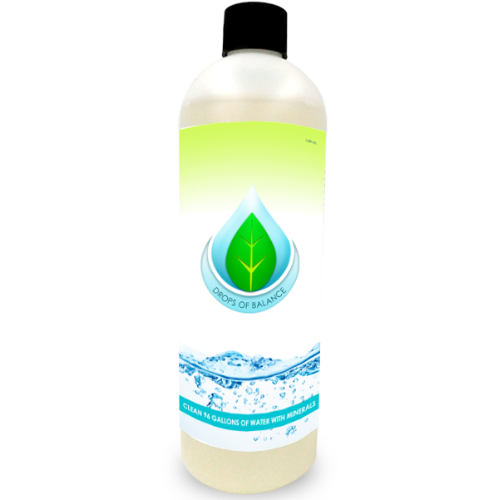
This is where Drops of Balance becomes a game-changer. Mark demonstrated how adding just a few drops to your watering routine does two amazing things:
It increases dissolved oxygen in your water. More oxygen means healthier roots, even when the soil is holding moisture. This gives you a bigger margin for error and helps prevent the anaerobic conditions that cause root rot.
It suppresses harmful pathogens. The mineral complex in Drops of Balance creates an environment where beneficial microorganisms thrive while suppressing the fungi and bacteria that cause plant diseases.
You're essentially turning regular tap water into a root health supplement. Instead of just hydrating your plants, you're actively improving their growing environment with every watering.
The Slow and Minimal Approach That Actually Works
Here's the watering method that Mark swears by, and it works for everything from houseplants to hydroponic systems:
Water slowly and thoroughly. Use a watering can with a narrow spout or a drip irrigation setup. You want water to penetrate deep, not run off the surface. This might take 10-15 minutes for larger plants, but it's worth it.
Wait for proper dry-down. Let the top inch or two of soil dry completely before watering again. For most houseplants, this means watering once or twice a week maximum, not daily.
Check drainage religiously. If water isn't coming out the drainage holes, your soil is either hydrophobic (water-repelling) or you're not using enough water. Both problems lead to the dreaded damp-but-not-saturated situation.
Monitor root health. Healthy roots should be white or light-colored and firm. Brown, mushy, or smelly roots mean you're dealing with the consequences of poor watering technique.

Why Your Daily Watering Habit Is Backfiring
If you're watering every day, you're probably making the classic mistake of keeping soil damp instead of achieving proper saturation cycles. Daily watering works for some outdoor gardens in hot climates, but for indoor growing, it's usually too much.
Indoor plants need wet-dry cycles. The drying period isn't harmful: it's essential. During this time:
- Roots get the oxygen they need to function properly
- Beneficial microorganisms can establish themselves
- Excess salts and waste products get flushed away during the next thorough watering
- The plant develops stress tolerance that makes it more resilient
Breaking the daily watering habit feels scary at first, but your plants will thank you with stronger growth and better health.
Upgrading Your Watering Strategy for Long-Term Success
The best growers don't just change their watering frequency: they upgrade their entire moisture management approach. Here's how to level up:
Install automatic watering systems. The Blumat automatic watering system delivers water slowly and consistently, achieving perfect saturation without the guesswork. These ceramic stakes release water as the soil dries, maintaining optimal moisture levels automatically.

Use proper containers. Make sure every pot has drainage holes. Those decorative pots without drainage? They're plant killers disguised as decor. If you must use them, treat them as cache pots with a properly draining liner inside.
Upgrade your water quality. Start adding Drops of Balance to every watering. The 8oz bottle treats up to 48 gallons of water, making it incredibly cost-effective for the root health benefits you get.
Monitor moisture levels accurately. Stop relying on finger tests. Get a proper moisture meter or learn to judge by the weight of your pots. Consistent monitoring helps you dial in the perfect watering schedule for each plant.
The Bottom Line on Damp vs. Saturated
The difference between damp and saturated isn't just semantics: it's the difference between thriving plants and constant plant casualties. Damp soil stays at the surface level, creates anaerobic conditions, and slowly kills roots. Proper saturation reaches deep, provides oxygen during dry-down periods, and builds the kind of robust root systems that support amazing plant growth.
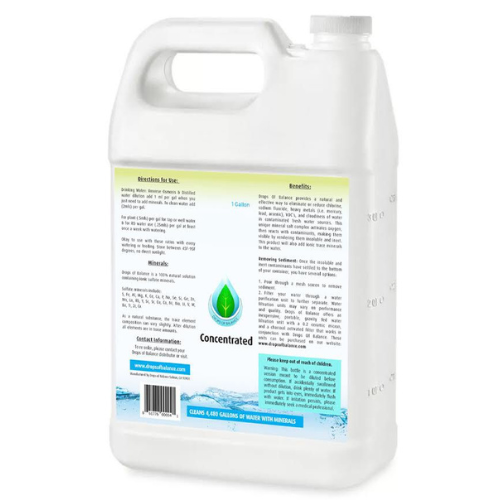
Most growers need to water less frequently but more thoroughly. Add Drops of Balance to boost oxygen levels and suppress pathogens. Let soil dry properly between waterings. And stop feeling guilty about not watering every day: your plants don't want daily moisture; they want proper saturation cycles.
This one lesson from Mark's Perfect Gardens TV episode has probably saved more plants than any other single piece of advice. The bucket experiment proves it, the science backs it up, and your plants will show you the results in healthier growth and stronger root systems.
Ready to upgrade your watering game? Start with proper water conditioning, ditch the daily watering habit, and watch your indoor garden transform from surviving to absolutely thriving.

Leave a comment
This site is protected by hCaptcha and the hCaptcha Privacy Policy and Terms of Service apply.