
If you have been in the gardening game for more than a few months, you’ve probably noticed the shift. Traditional hard plastic pots, which used to be the industry standard for everything from backyard tomatoes to high-end hydroponic setups, are being pushed aside. In their place, you’ll find soft, breathable fabric bags.
At Perfect Gardens, we get asked all the time: "Does it really make a difference what I put my dirt in?" The short answer is yes. In fact, it might be one of the most underrated factors in your plant’s final yield. While plastic pots have their place: mostly in the very early stages of a plant's life: fabric grow pots outperform them in almost every metric that actually matters for plant health.
In this guide, we’re going to break down why fabric pots, especially high-quality ones like Grassroots, are the superior choice for serious growers. We’ll look at the science of "air pruning," why temperature control is the silent killer of root health, and why your plants might be "choking" in those old-school plastic buckets.
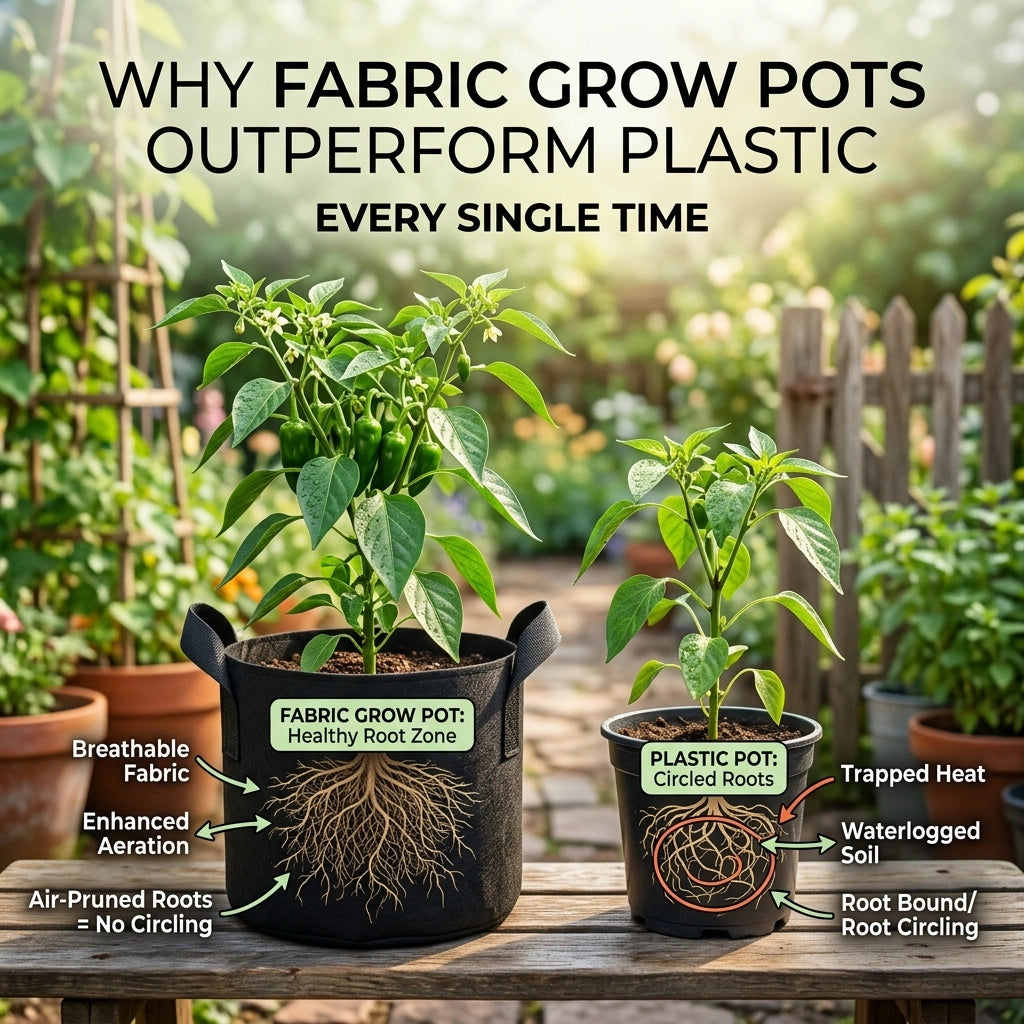
The Root of the Problem: Plastic and Root Circling
To understand why fabric is better, we first have to look at what happens inside a plastic pot. When a root grows in a plastic container, it eventually reaches the hard, impenetrable wall. Because the root can’t go through the plastic, it starts to grow in circles around the edge of the pot.
This is known as being "root-bound." These circling roots eventually become a thick, woody mass that chokes the plant. They compete with each other for space and nutrients, and because they are all concentrated on the outer edges, the center of your growing medium remains largely unused.
The fact of the matter is, a root-bound plant is a stressed plant. Stressed plants are more susceptible to pests, diseases, and nutrient lockout. If you’ve ever pulled a plant out of a plastic pot and seen a "bird's nest" of white roots tightly coiled at the bottom, you’ve seen the primary limitation of plastic.
The Secret Weapon: Air Pruning
Fabric pots solve the root-bound issue through a process called air pruning.
Because fabric is breathable, air can pass through the walls of the pot. When a root tip reaches the edge of a fabric pot, it senses the air and high oxygen levels. This naturally causes the tip of the root to dry out and stop growing. While that might sound like a bad thing, it’s actually a biological "hack."
When the main root tip stops growing, the plant is triggered to send out thousands of tiny lateral feeder roots from the center. Instead of a few long, circling roots, you end up with a massive, fibrous root system that fills the entire volume of the soil.
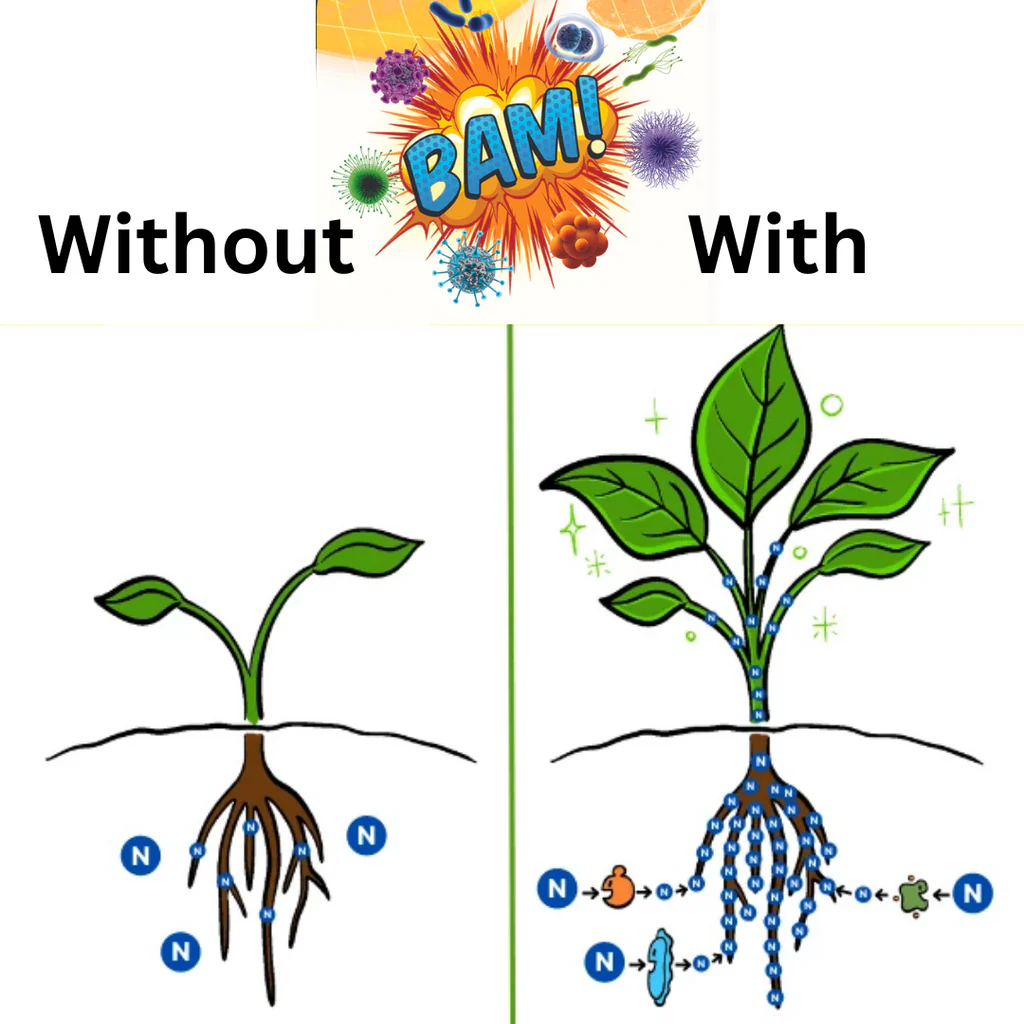
More feeder roots mean more surface area to absorb water and nutrients. This leads to faster growth and significantly larger yields. It’s the difference between a plant drinking through one straw versus a thousand tiny straws. If you want to maximize this even further, adding something like BAM! Microbial Inoculant to your root zone helps these new feeder roots establish a symbiotic relationship with beneficial microbes immediately.
Temperature Control and Heat Dissipation
One of the biggest challenges for indoor growers: and outdoor growers in hot climates: is managing root zone temperature. Plastic is a fantastic insulator. While that’s great for a thermos, it’s terrible for a plant.
On a hot day, a black plastic pot acts like a solar oven. It traps heat inside the soil, often raising the temperature of the root zone significantly higher than the ambient air temperature. Once roots get too hot, they stop functioning. They can’t take up water, and they become a breeding ground for pathogens like Pythium (root rot).
Fabric pots provide natural heat dissipation. As water evaporates through the sides of the fabric, it creates a cooling effect (evaporative cooling). This keeps the root zone significantly cooler than it would be in a plastic container. For growers using high-intensity LED lights, this extra breathability is a lifesaver. It ensures that even if your canopy is getting hit with intense energy, your roots stay in their "goldilocks" zone.
Oxygenation: Letting Your Roots Breathe
Roots need oxygen to perform cellular respiration. In a plastic pot, oxygen can only enter through the top surface of the soil or the few drainage holes at the bottom. This often leads to "dead zones" in the middle of the pot where the soil becomes compacted and anaerobic (oxygen-poor).
Fabric pots allow for 360-degree oxygenation. Air is constantly moving through the walls of the pot and into the soil. This high level of oxygenation prevents the growth of anaerobic bacteria and promotes a healthy aerobic environment for beneficial fungi and bacteria.

If you’ve struggled with overwatering in the past, fabric pots are much more forgiving. In a plastic pot, excess water sits at the bottom, drowning the roots. In a fabric pot, the porous material allows excess moisture to escape and air to move in, significantly reducing the risk of damping off or root rot.
The Grassroots Advantage: Not All Fabric is Equal
While we are big fans of fabric pots in general, there is a common complaint: they can dry out too fast. Standard fabric pots lose moisture from the sides so quickly that growers find themselves watering twice as often, and the outer edges of the soil can become hydrophobic (water-repellent).
This is why we often recommend Grassroots Fabric Pots. Grassroots solved this problem by adding a specialized moisture liner to the top few inches of the pot.

This liner prevents the top of the soil from drying out prematurely while still allowing for air pruning at the bottom and sides. It directs water downward into the root zone rather than letting it leak out the sides immediately. This creates a more consistent moisture profile, which is essential if you are using organic living soil or automated irrigation systems like Blumat.
When Plastic Still Makes Sense
We aren't saying you should throw away every piece of plastic in your grow room. There are specific times when plastic is actually better.
For seedlings and clones, plastic is usually the right call. Young plants need high humidity and consistent moisture to establish their first set of roots. Because fabric pots breathe so well, they can dry out tiny seedlings before they have a chance to take hold.

Standard plastic seedling starter trays are ideal for the first 1–3 weeks of growth. Once the plant has established a healthy root base in a small cube or cell, that is the perfect time to transplant it into a fabric pot for its long-term home. If you are starting from scratch, check out our Cloning Room Essentials to get that early stage right.
Storage and Sustainability
From a practical "space-saving" perspective, fabric pots win every time. If you have 50 five-gallon plastic buckets, you need a whole shed to store them. If you have 50 five-gallon fabric pots, they fold flat and fit into a single small box.
They are also incredibly durable. You can wash them between grows (just a quick soak in a light bleach or peroxide solution and a rinse) and reuse them for years. While plastic pots often crack or become brittle over time due to UV exposure, high-quality fabric pots are built to withstand the elements.
Making the Switch: What You Need to Know
If you are moving from plastic to fabric for the first time, there are a few adjustments you’ll need to make:
- Watering Frequency: You will likely need to water more often. Because the pots "breathe," the medium dries out faster. Check your soil daily until you get a feel for the new rhythm.
- Feeding Strength: Because you are watering more frequently, you might need to adjust your nutrient concentration. If you're using a hydroponic setup, keep a close eye on your EC/PPM levels to ensure you aren't building up salts.
- Transplanting: Don't wait too long to transplant into fabric. The goal is to get those roots air-pruning as soon as the plant is sturdy enough to handle the move.
- Elevate Your Pots: To get the full benefit of air pruning, don't let your fabric pots sit directly on a flat, non-porous floor. Use a pot elevator or a mesh rack to allow air to reach the bottom of the pot as well.
Final Thoughts
The goal of any grower is to create an environment where the plant can thrive with as little stress as possible. By switching to fabric grow pots, you are solving three major problems at once: you’re preventing root circling, you’re cooling the root zone, and you’re massiveley increasing oxygen delivery.
While plastic is a "fine" choice for beginners or short-cycle crops, the serious gardener knows that the secret to a massive harvest starts underground. Give your roots the space and air they need, and they will reward you with the best growth you've ever seen.
If you're ready to upgrade your setup or need help troubleshooting your current root zone, head over to our Grow Help section or browse our full range of Grow Essentials. We’re here to make sure your garden is nothing short of perfect.

Leave a comment
This site is protected by hCaptcha and the hCaptcha Privacy Policy and Terms of Service apply.