

If you’ve been growing for any amount of time, you know the frustration of the "Christmas Tree" plant. You’ve got one massive, beautiful top cola, and then a whole bunch of "popcorn buds" at the bottom that never quite got the memo, or the light, to bulk up.
The fact of the matter is, indoor lighting isn't like the sun. The sun moves across the sky, hitting every angle of your plant throughout the day. Your high-end LED stays in one spot. Because of the way physics works (specifically the inverse square law), light intensity drops off incredibly fast as it moves away from the source. If your top bud is 12 inches from the light and your lower branches are 3 feet away, those lower sites are basically living in the shadows.
To fix this, we use canopy training. We’re essentially tricking the plant into growing flat instead of tall. Today, we’re breaking down the two heavy hitters of the training world: Low Stress Training (LST) and High Stress Training (HST). Both have their place in your grow tent, but knowing when to use which can be the difference between a mediocre harvest and a record-breaking yield.
What is Low Stress Training (LST)?
LST is exactly what it sounds like. We are manipulating the plant's growth without causing physical trauma. Think of it like yoga for your plants. The goal is to pull the main stalk down and secure it, which breaks "apical dominance."
Apical dominance is a fancy way of saying the plant wants to put all its energy into the highest point (the main cola). When you bend that main tip down so it’s lower than the side branches, the plant gets confused. It starts redistributing growth hormones (auxins) to all those side nodes, turning them into multiple main colas.

How to do LST properly:
- Start Early: You want to begin when the plant is young and the stems are still flexible. If the stem feels woody, you’ve waited too long.
- Anchor the Base: Before you pull the top over, tie the base of the stem in the opposite direction. This prevents you from accidentally ripping the entire root system out of the medium.
- Bend and Tie: Gently bend the main tip and secure it using soft garden ties or a plant tying tool kit. Avoid using thin string or fishing line, as these can cut into the plant as it grows.
- Maintain the Canopy: As the side branches grow up to meet the light, tie them down too. Your goal is a flat, even table of green.
The beauty of LST is that there is zero recovery time. Since you aren't cutting the plant, it doesn't need to stop growing to heal. This makes LST the gold standard for Autoflowers, which have a preset internal clock and can't afford a week of "down time" to recover from a heavy prune.
Moving into the Danger Zone: High Stress Training (HST)
Now, if LST is yoga, HST is surgery. This involves intentionally "wounding" the plant to force it to grow a certain way. While it sounds scary for beginners, HST is an incredibly powerful tool for maximizing yields in tight spaces if you have the patience to let the plant recover.
Topping and FIMing
Topping involves cutting off the very top growing tip of the plant. Instead of one main stem, the plant will now grow two. If you do this multiple times, you can turn one cola into four, eight, or sixteen.
FIMing (which stands for "F*** I Missed") is a variation where you only remove about 75% of the tip. It’s less precise but often results in four new shoots instead of two. It's a bit of a gamble, but when it works, it’s like magic for your canopy density.
Super Cropping
This is the art of crushing the inner tissue of a branch (the pith) without breaking the outer "skin." You pinch the stem until it feels soft and then bend it at a 90-degree angle. The plant will form a thick "knuckle" at the bend, which actually improves nutrient transport once it heals. It’s a great way to control height if a particular branch is stretching too close to your LED grow lights.

Light Penetration: The Science of the Canopy
Why do we go through all this trouble? It comes down to light penetration and airflow.
When you have a dense, bushy plant that hasn't been trained, the top leaves act like umbrellas. They soak up all the light and leave the middle and bottom of the plant in total darkness. This leads to high humidity in the center of the plant (a recipe for mold) and wispy, underdeveloped buds at harvest.
By using LST or HST, you are opening up the "lanes" for light to reach deep into the plant. This is where using the right materials in your room comes into play. If you're using Panda Film, that white side is reflecting light back into the sides of your canopy that the overhead light might miss.

LST vs. HST: Which One Should You Choose?
There’s no "right" answer here, but there is a right answer for your specific situation.
| Feature | Low Stress Training (LST) | High Stress Training (HST) |
|---|---|---|
| Effort Level | Continuous (requires weekly adjusting) | Intermittent (do it once, let it heal) |
| Risk Factor | Very Low | Moderate to High |
| Recovery Time | None | 3 to 7 days |
| Best For | Autoflowers & Beginners | Photoperiods & Experienced Growers |
| Space Impact | Widens the plant | Controls height and increases sites |
| Yield Impact | Solid increase | Maximum potential increase |
If you are working in a small setup, like an AC Infinity 2x2 tent, height is your biggest enemy. You simply don't have the vertical room to let a plant grow naturally. In this case, a combination of topping (HST) followed by LST to spread the new branches out is usually the best bet.

The Equipment Factor
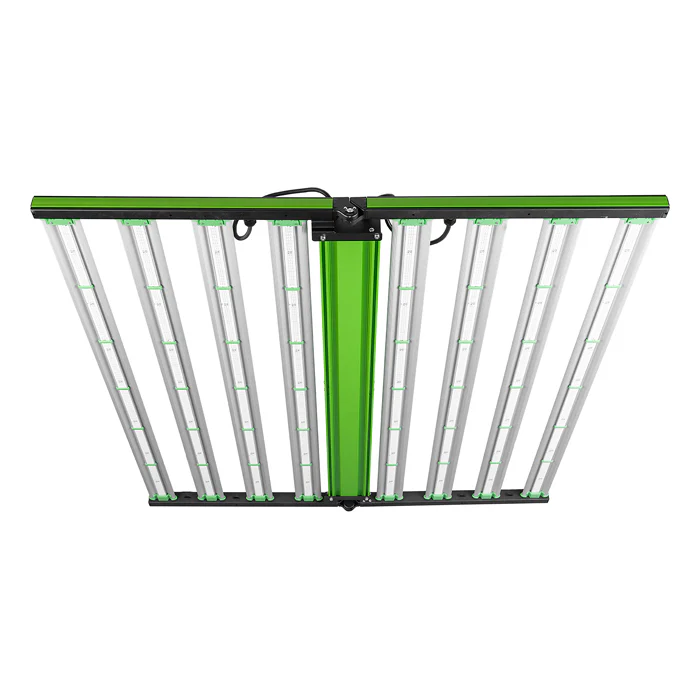
You can be the best trainer in the world, but if your light can't penetrate more than 6 inches of canopy, you’re still going to struggle. Modern LED technology has come a long way. Fixtures like the Spectrum-Y Wireless LED or commercial-grade bar lights are designed to provide uniform coverage. Unlike old-school HPS bulbs that had one "hot spot" in the middle, these bars spread the diodes out, which works perfectly with a flat, trained canopy.
Common Pitfalls and "Cautions"
It’s easy to get over-excited and over-train your plants. Here are a few things to watch out for:
- Snapping Branches: It happens to the best of us. If you snap a branch during LST or Super Cropping, don't panic. Tape it back together immediately with some electrical tape or grafting tape. Most of the time, the plant will heal itself within a week.
- Training Too Late: Once a plant enters the flowering stage, its stems become much more rigid. Trying to do heavy LST during mid-flower is a great way to snap your main colas off. Get your structure set during the vegetative stage.
- Ignoring Airflow: A perfectly flat canopy can sometimes become too dense. If you can’t see through the plant at all, you need to do some strategic defoliation. Without airflow, you’re inviting powdery mildew to the party.
- Neglecting Nutrients: High Stress Training is, well, stressful. Make sure your plants are healthy and well-fed before you start hacking away at them. If a plant is already showing signs of a nitrogen deficiency or heat stress, wait for it to recover before topping it.
The Hybrid Approach: The Pro Way
The most successful growers I know don't just pick one method. They use a "Hybrid Approach."
They’ll start by topping the plant at the 4th or 5th node to create two main stems. Once those stems grow out a bit, they’ll use LST to pull them toward the corners of the tent. As the plant fills out, they might use super cropping to keep any "runaway" branches in check.
This creates a massive "manifold" of branches that are all roughly the same distance from the light. When you flip to flower, instead of one big bud and a bunch of fluff, you get 10-15 "main" colas. That is how you maximize yield in a small space.
Final Thoughts
Training your canopy is one of those skills that separates the hobbyists from the pros. It doesn't cost much: just some garden ties and a little bit of your time: but the return on investment is huge.
If you’re nervous about cutting your plants, start with LST. Grab some soft ties and just start bending. You’ll be amazed at how quickly the plant responds. If you have questions about which lights or tents are best for your specific training goals, feel free to reach out to us on our contact page. We’ve helped thousands of growers dial in their setups, and we’re always happy to help you join the Army of Growers.
Happy growing!


Leave a comment
This site is protected by hCaptcha and the hCaptcha Privacy Policy and Terms of Service apply.