
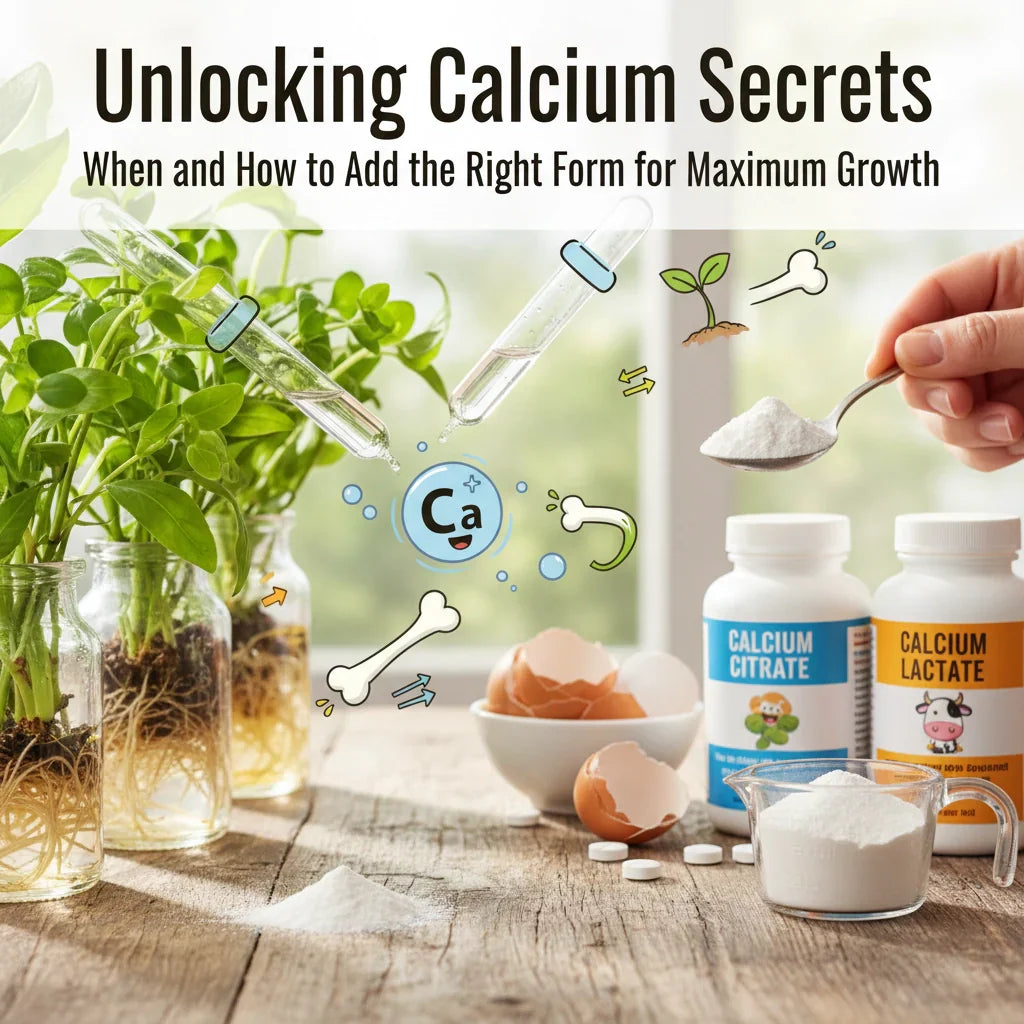
Most growers know calcium is important for plants. But here's what they don't tell you: timing and form matter more than the amount you add. Get this wrong, and you'll watch perfectly healthy plants develop mysterious deficiencies, blossom end rot, or tip burn: even when your calcium levels test fine.
Mark from Perfect Garden TV recently broke down the calcium puzzle that's been stumping growers for years. The secret isn't just about adding more calcium. It's about understanding when your plants actually need it most, which form works best for each growth stage, and how to make sure your existing minerals are even available in the first place.
Why Plants Crave Calcium Throughout Every Growth Stage
Here's the reality: your plants are constantly building new cells. Whether they're pushing vegetative growth or developing flowers, calcium is the construction worker that builds cell walls. Without adequate calcium at the right times, you get weak plant structure, poor disease resistance, and those frustrating end-of-season problems that seem to come out of nowhere.
But here's where it gets interesting. Calcium needs aren't static. During vigorous vegetative growth and the first few weeks of flowering, your plants are essentially in "construction mode": building tons of new tissue. This is when calcium demand peaks.
The roles calcium plays in your garden:
- Cell wall construction - Creates the foundation of plant structure
- Root and shoot development - Powers new growth from the ground up
- Disease resistance - Strengthens plants against pathogens
- Preventing blossom end rot and tip burn - Those brown, crispy leaf tips? Often calcium-related
- Nutrient transport - Helps move other minerals where they need to go

The Timing Secret Most Growers Miss
Here's where conventional wisdom gets it wrong. Most growers think calcium needs are consistent throughout the plant's life. That's not how it actually works.
Your plants need the most calcium during:
- Heavy vegetative growth periods - When they're building lots of leaf and stem tissue
- First 3-4 weeks of flowering - The initial flower development stage requires serious cell construction
But here's the plot twist: once your soil develops a healthy microbial ecosystem with proper enzyme activity (usually around week 4+ of flowering), calcium requirements can actually drop slightly. This is especially true if you've built up a good humic layer and aren't constantly flushing your growing medium.
The bacteria in healthy soil become incredibly efficient at making existing calcium available to plants. This is why experienced organic growers often reduce their calcium inputs later in flowering: they've built a system that works smarter, not harder.
The Four Forms of Calcium (And When to Use Each)
Not all calcium is created equal. Each form has specific benefits and ideal timing. Here's the breakdown:
Calcium Nitrate - The Early Growth Champion
Best for: Vegetative growth and early flowering
- Water-soluble and immediately available
- Provides both calcium and nitrogen
- Perfect for plants in rapid growth phases
- Easy to mix into nutrient solutions
Caution: The nitrogen content makes this less ideal later in flowering when you want plants focusing on flower development rather than leaf growth.
Calcium Carbonate - The pH Adjuster
Best for: Acidic soils that need pH correction
- Found in eggshells and limestone
- Slowly releases calcium over time
- Raises soil pH as it breaks down
- Great for long-term soil conditioning
The catch: Can make your soil too alkaline if overused, especially in neutral or basic soils.
Calcium Acetate - The Neutral Option
Best for: Growers who want water-soluble calcium without pH changes
- Won't affect your soil's pH
- Water-soluble for quick availability
- Easy to make at home (eggshells + vinegar method)
- Gentle enough for sensitive plants
This is becoming the go-to choice for many hydroponic and container growers who need precise control.

Calcium Sulfate - The Soil Improver
Best for: Building long-term soil health
- pH neutral
- Improves soil structure and drainage
- Feeds beneficial bacteria
- Provides both calcium and sulfur
The hidden benefit: Calcium sulfate actually makes your soil more hospitable to the microbes that help plants access other nutrients naturally.
The Pre-Calcium Step Nobody Talks About
Before you start adding any calcium supplements, there's a critical step most growers skip: making sure your existing water minerals are actually available to your plants.
This is where products like Drops of Balance become game-changers. Your tap water already contains calcium and other minerals, but they're often in forms plants can't easily use.

Think of it like this: you might have a garage full of tools, but if they're all rusty and scattered, you can't build anything. Drops of Balance essentially organizes and "polishes" the minerals in your water, making them bioavailable before you even think about adding more.
The process works like this:
- Treat your base water with Drops of Balance
- Test to see what nutrients are actually available
- Supplement only what's truly missing
- Monitor plant response and adjust accordingly
This approach often reveals that calcium "deficiencies" were actually availability problems, not quantity problems.
Reading Your Plants: When They're Telling You About Calcium
Your plants are constantly communicating their calcium status. Here's how to decode the messages:
Early warning signs:
- New growth appears smaller than usual
- Leaf margins start looking crispy or brown
- Stems seem weaker than they should be
- Flowers develop slowly or unevenly
Advanced deficiency symptoms:
- Classic blossom end rot in tomatoes and peppers
- Tip burn on leaves (especially in hydroponic systems)
- Increased susceptibility to fungal diseases
- Poor fruit development and storage quality
The timing clue: Calcium deficiency symptoms usually show up on newer growth first, because calcium doesn't move around the plant easily once it's been deposited in older tissues.

Building Your Calcium Strategy
The most successful growers develop a calcium strategy rather than just adding random supplements. Here's a framework that works:
Week 1-4 (Vegetative Growth):
- Use calcium nitrate for rapid availability
- Monitor new growth for size and vigor
- Ensure water is properly mineralized with Drops of Balance
Week 1-3 of Flowering:
- Continue calcium nitrate if nitrogen levels are appropriate
- Consider switching to calcium acetate if you want to reduce nitrogen
- Watch for early flower development quality
Week 4+ of Flowering:
- Reduce calcium inputs if soil biology is well-established
- Focus on maintaining, not increasing, calcium levels
- Monitor for any late-stage deficiency signs
Long-term soil building:
- Add calcium sulfate during soil preparation
- Use calcium carbonate only if soil pH needs adjustment
- Build beneficial bacteria populations that make calcium more available
The Bottom Line on Calcium Success
The calcium game isn't about dumping more minerals into your system. It's about understanding when your plants need it most, choosing the right form for your growing method, and making sure your basic water chemistry is working in your favor.
Start with water optimization using products like Drops of Balance, then supplement strategically based on growth stage and plant response. Your plants will show you the difference in stronger stems, better disease resistance, and that crisp, healthy appearance that comes from proper mineral nutrition.
The growers who master calcium timing and forms? They're the ones whose gardens thrive year after year, with fewer problems and better yields. The secret is in the details; and now you have them.




Leave a comment
This site is protected by hCaptcha and the hCaptcha Privacy Policy and Terms of Service apply.